








Most companies still run on assembly-line thinking. They break work into narrow tasks. They reward compliance over judgment. That model built the 20th century, but it cannot survive the AI era.
The future of work trends shaping 2026 reward a different kind of organization. Winners build lean, trust-based teams that pair humans with AI agents. Laggards keep patching old hierarchies with new tools, then wonder why nothing changes.
Workplace trends 2025 already hinted at this shift. The World Economic Forum’s Future of Jobs Report projects a 39% shift in core job skills by 2030. Gartner found something sharper: only 1 in 50 AI initiatives actually delivers transformative value.
The gap between hype and results is where winners separate from everyone else. Here are the seven shifts that matter most this year.
1. AI-Native Pods Replace Traditional Teams
Scrum teams built for predictable software cycles struggle with AI-speed work. Pods solve this problem. A pod is a small, cross-functional team of humans and AI agents working toward one outcome.
Pods make decisions fast. They skip the layers of approval that slow corporate teams down. Our breakdown of AI agile methodology replacing Scrum at forward-thinking companies explains this shift. It shows how pods work in real organizations.
2. Three-Day Bolts Replace Two-Week Sprints
The traditional sprint assumes slow feedback loops. AI breaks that assumption. Teams can now prototype, test, and ship in three days instead of two weeks.
This is the core of the ADLC, or AI Development Lifecycle. It is the framework replacing SDLC across forward-thinking companies. Shorter cycles mean faster learning and fewer sunk-cost projects. Read our full explanation of the shift from SDLC to ADLC for the mechanics behind it.
3. EQ-Driven Leadership Becomes Non-Negotiable
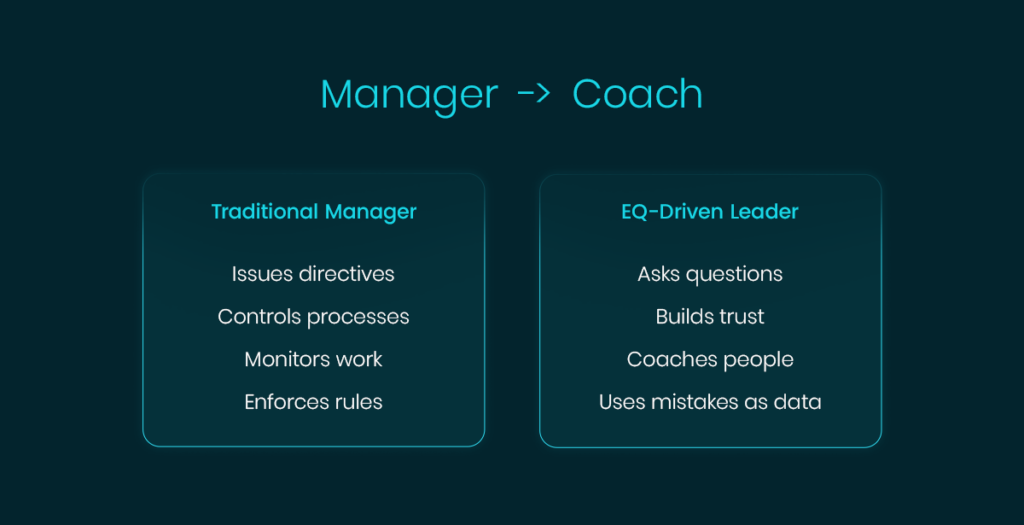
Process cannot replace judgment. Leaders need emotional intelligence more than ever as AI takes over repetitive tasks. They must read people, build trust, and coach instead of controlling.
Gartner’s research backs this up. Bolting AI onto old workflows is not enough. Teams that redesign workflows around AI are twice as likely to beat their revenue goals. That redesign work depends on leaders who understand people, not just processes. Our Executive Leadership Development in 2026 piece covers what this looks like in practice.
What does EQ-driven leadership look like day to day? It looks like managers who ask questions instead of issuing directives. They give feedback in real time. They treat mistakes as data, not failures.
4. Future of Work Skills Center on AI Fluency
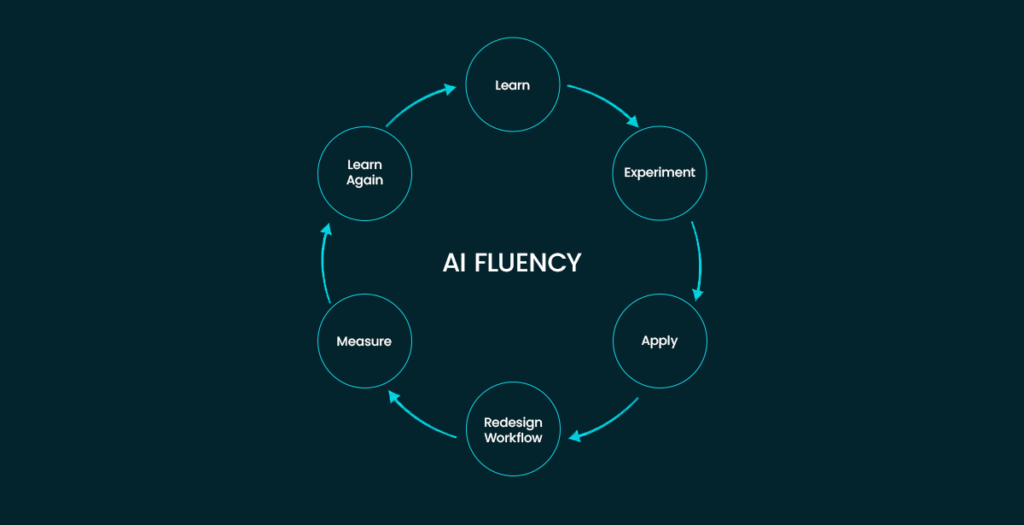
A single workshop does not build lasting AI fluency. The half-life of technical skills keeps shrinking, so upskilling has to become continuous, not a checkbox.
The future of work skills gap is real and growing. AI and big data literacy now rank as the fastest-growing skill category through 2030. Companies that treat this as a habit will out-innovate those that treat it as a one-time event.
Basic prompt engineering training is not enough anymore. Employees need to redesign their own workflows around AI tools, not just write better prompts.
5. Flat, Pod-Based Structures Outperform Hierarchies
Corporate DNA layers approvals, titles, and committees between an idea and its execution. Startup DNA flattens that structure, so decisions happen closer to the work.
This does not mean chaos. It means clear ownership at the team level instead of centralized control at the top. Pods maintain accountability without a traditional chain of command.
Large enterprises often move slower here. It is not because they lack resources. Their structures were built for a different era. They keep layering new AI tools onto decades-old hierarchies instead of redesigning them.
6. Human-Agent Collaboration Becomes a Core Skill
Working alongside AI agents is now a baseline expectation, not a specialized skill. Employees need to know when to trust an AI output and when to override it.
Gartner calls sloppy, uncorrected AI output “workslop.” It is already costing companies real time and credibility. Winners train their people to catch this early, while losers let it pile up in customer-facing work.
This shift also changes hiring. Future workforce trends favor employees who can direct AI agents effectively, not just avoid them.
7. Radical Transparency Replaces Policy Enforcement
Rigid policies do not build trust. They signal that leadership does not trust its own people. Transparency has become the substitute for constant oversight, since remote and hybrid work are now permanent fixtures.
Companies that share real numbers, real reasoning, and real constraints with their teams see stronger retention and faster execution. Our article on why coaching will replace policy enforcement breaks down what this looks like in practice.
Want a structured way to test where your organization stands? Our Discovery Workshop walks leadership teams through this kind of assessment.
The Bottom Line on Future of Work Trends
Future of work trends in 2026 reward organizations that act on evidence, not hype. The data backs this up. Gartner found that fewer than 1% of recent layoffs came from real productivity gains. Most AI-driven cuts were bets, not results.
This is the work trends AI conversation in a nutshell: adopt with discipline, or adopt for show. Winners will build pods instead of hierarchies. They will coach instead of enforce. They will treat AI upskilling as continuous work, not a one-time event.
Start with one shift from this list. Pick the one your organization resists the most. That resistance usually points to where the biggest gain is waiting.
Ready to see where your organization actually stands? Our AI Upskilling Workshop gives leadership teams a practical starting point, grounded in real skill-building instead of buzzwords.
Frequently Asked Questions
What are the biggest future of work trends for 2026?
The biggest trends include AI-native pods, continuous upskilling, EQ-driven leadership, and flatter structures that speed up decisions.
Why do most digital transformations fail?
Research shows 65–70% of digital transformations fail. The main causes are cultures that resist experimentation and structures that layer new tech onto old hierarchies.
How is AI changing workplace skills?
The World Economic Forum projects that 39% of core job skills will change by 2030. AI and big data literacy now rank among the fastest-growing skills employers want.