








Executive Leadership Development in 2026: What the AI Shift Demand
Something is happening at the top of most organizations right now. Executives feel the weight of AI transformation bearing down on every decision they make. Many respond by buying tools, hiring consultants, and announcing AI strategies. Outcomes rarely match the ambition.
Technology is not the core problem. Most leaders already have access to AI tools. That gap is a leadership gap — and no amount of new software closes it.
This is why executive leadership development matters more in 2026 than it ever has before.
The Old Leadership Model Is Buckling
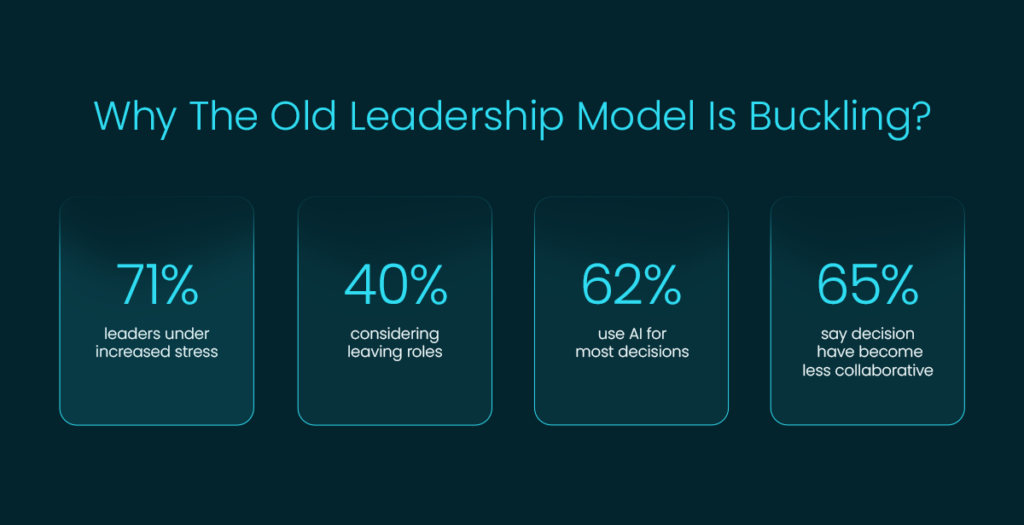
DDI’s Global Leadership Forecast found that 71% of leaders report being under increased stress, with 40% actively considering leaving their roles. Burnout is no longer an individual problem. It signals that the old leadership model is failing under new conditions.
Traditional leadership development programs built executives to manage processes, control information flows, and optimize existing operations. Those capabilities still matter. But they no longer cover the full job.
AI is reshaping what executives actually need to do. According to a 2026 survey, 62% of leaders now use AI to make the majority of their decisions. Meanwhile, 65% say decision-making has become less collaborative since they adopted AI. Think about what that means: leaders are offloading judgment to machines while simultaneously becoming more isolated.
Not transformation. Abdication.
The Real Gap: Judgment, Not Technical Fluency
Most organizations treat the AI skills gap as a training problem: get leaders up to speed on the tools and the gap closes. McKinsey’s 2025 State of AI report tells a different story. Only 1% of companies have achieved what researchers define as AI maturity, while 92% plan to increase AI investments.
Investment is outpacing maturity — and leadership is why.
WEF projects that 39% of core job skills will change by 2030. Leadership-related abilities (judgment, accountability, adaptability) are rising fastest alongside AI literacy. Technical fluency matters. But judgment is the variable that actually determines outcomes.
Executives who pursue genuine leadership transformation do not just learn how to use AI. They learn how to think, decide, and lead in environments where AI sits inside every meeting, every decision, and every team dynamic.
Three Shifts That Define AI-Era Leadership
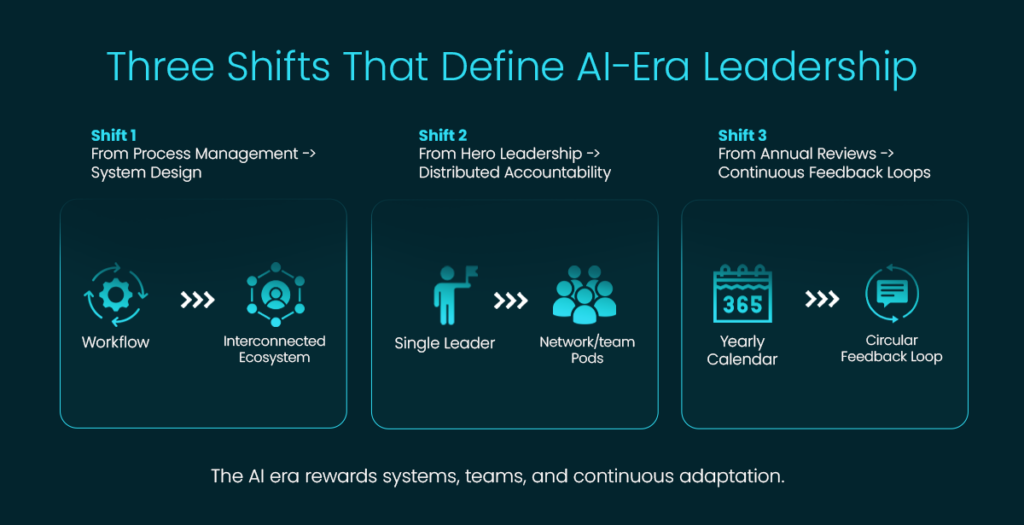
Effective executive leadership development in 2026 builds three specific shifts. Not competencies that sit in a framework document. These are real behavioral changes that show up in how executives run their organizations day to day.
From managing processes to designing systems. Spending time on process oversight misuses an executive’s most valuable resource. AI handles execution faster than any human team. System design becomes the new role: structuring how humans and AI agents work together, where authority sits, and how teams measure outcomes.
From individual decisions to distributed leadership accountability. AI-era organizations reward teams, not heroes. Executives who push decisions down to pods and small cross-functional teams, and build the culture to support it, move faster and develop stronger organizational capacity. Leadership accountability becomes a team practice, not a solo performance.
From annual reviews to continuous feedback loops. Short execution cycles generate data faster than quarterly reviews can process. Executives who shift to continuous feedback, reading signals weekly and adjusting direction monthly, give their organizations a genuine competitive edge.
Leadership consulting is often the fastest path to making these shifts in practice. Embedded, ongoing coaching changes behavior in real working contexts. Classroom sessions don’t.
What a Real Leadership Development Program Looks Like in 2026
Many organizations still treat executive development as an event. A two-day offsite. A speaker. A workbook. Everyone returns to the same behaviors and the same incentive structures.
It does not work. It never did. But AI makes the gap between what organizations need and what those programs deliver impossible to ignore.
Modern executive leadership coaching embeds inside the work, not alongside it. Coaches work with leaders on live challenges: a market entry, a restructuring, an AI lab launch. Development happens through real decisions, not hypothetical case studies.
A strong leadership development program also builds culture alongside individual capability. An executive who develops genuine leadership accountability while their team still runs on fear and compliance has only solved half the problem.
Starting with a discovery workshop gives leadership teams a structured diagnosis: where they actually stand, where the real gaps are, and what a focused plan needs to address. Not a generic framework. A specific one.
For a broader view on building the organizational foundation that makes this stick, our piece on building a future of work strategy that survives the AI shift covers the full picture.
The Bottom Line
Executive leadership development in 2026 is not about staying current on AI trends. Building judgment, accountability structures, and behavioral habits is the real work.
Technology is here. Tools are accessible. What separates organizations that succeed from those that stagnate is whether the people at the top have done the hard work of developing themselves for the era they actually operate in.
None of it happens at an offsite. It happens in the trenches, with the right coaching, the right structure, and an honest commitment to change.