







Employee engagement strategies built for 2015 don’t work in 2026. AI is rewriting job descriptions faster than most HR playbooks can keep up. Gallup’s 2025 State of the Global Workplace report found that global employee engagement dropped to 20%, its lowest point since 2020.
AI is not just automating tasks. It is changing what a “role” even means. Founders who lean on old tactics, like free snacks and annual reviews, miss the real problem.
People disengage when they lose ownership over their work. AI makes that risk worse unless leaders redesign how work actually gets done. Here are the employee engagement strategies that hold up when AI touches every role.
Why Old Employee Engagement Playbooks Are Failing
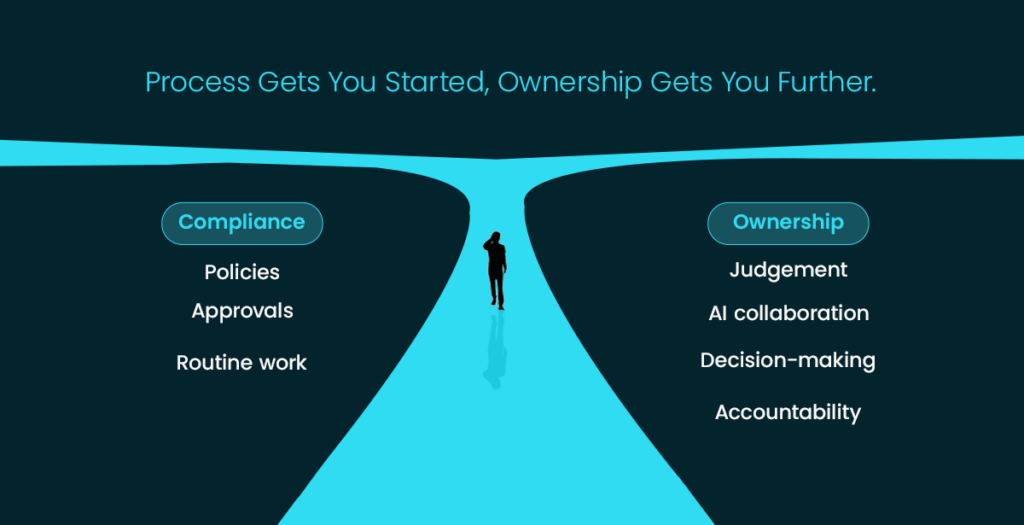
Most corporate cultures still run on assembly line thinking. Break work into small, standardized tasks. Make people replaceable. Add more process when things go wrong. This model worked for factories. It fails for knowledge work, and it fails even harder once AI enters the picture.
Job security fears are rising fast. In Gallup’s research, 18% of U.S. employees expect their job to disappear within five years because of automation or AI. That number climbs to 23% inside companies that have already rolled out AI tools. Fear does not drive engagement. It drives quiet quitting.
The fix is not a better perks package. It is a different operating model, one built on trust instead of control.
Culture of Accountability Beats Culture of Compliance
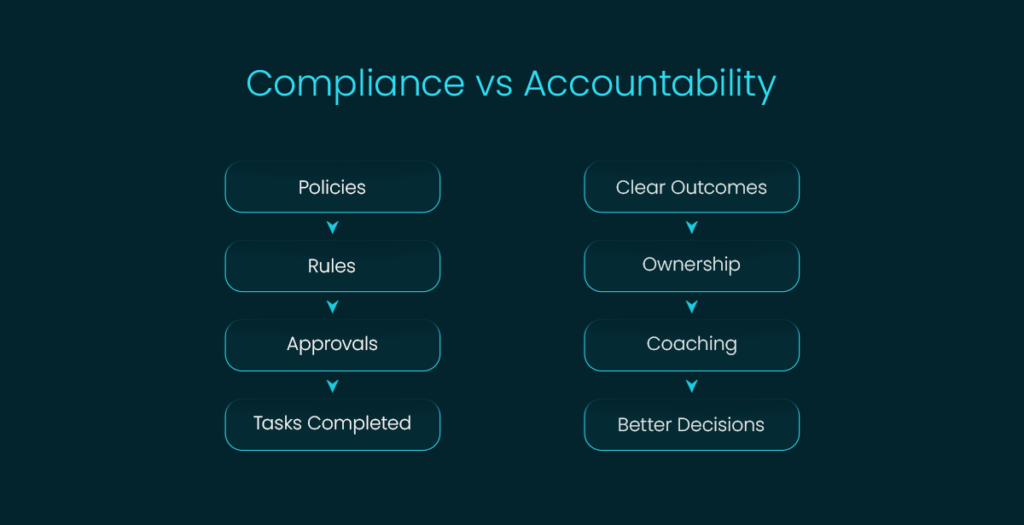
A culture of accountability looks nothing like a culture of compliance. Compliance asks people to follow rules. Accountability asks people to own outcomes.
Coaching, not policy enforcement, is what makes accountability stick. Rigid rulebooks backfire with modern teams, a pattern we unpack in why coaching will replace policy enforcement. Rules tell people what they cannot do. Coaching tells people what great work looks like, then trusts them to get there.
This matters more, not less, as AI enters daily workflows. When an AI agent drafts the first version of a report, a human still owns the judgment call.
Accountability has to sit with a person, every time. Teams that build this expectation early adapt faster than teams that wait for a crisis to force the issue.
Team Culture Building Starts With Ownership
Real team culture building starts with ownership, not with another all-hands meeting. Give people a clear problem to solve and the authority to solve it. Ownership culture means employees make real decisions, not just suggestions that go up a chain of approval.
Startup DNA organizations already work this way. They run lean, flat, and fast. Corporate DNA organizations, by contrast, bury decisions in layers of sign-off. Most companies in Pakistan and the Gulf still lean corporate, which is exactly why disengagement runs so high.
Small, cross-functional pods are one practical way to build ownership at scale. Pods of humans and AI agents replace rigid, hierarchical teams, as we cover in decentralized team structures. Each pod owns a problem end to end. Nobody waits for permission to move.
What a High Performance Culture Looks Like With AI on the Team
A high performance culture treats AI as a teammate, not a threat. The World Economic Forum’s Future of Jobs Report projects 92 million jobs displaced by 2030, but 170 million new roles created, a net gain of 78 million. Roles are shifting, not vanishing.
High-performance teams pair humans with AI agents inside short execution cycles, sometimes called bolts, instead of two-week sprints. People still set direction, judge quality, and make the calls that matter. AI handles the repetitive first draft.
Does AI reduce the need for employee engagement? No. It raises the stakes. When routine tasks get automated, the human work that remains is judgment, creativity, and relationships. Disengaged people do that kind of work badly. Engaged people do it exceptionally well.
Many so-called agile structures are agile in name only. Legacy hierarchies quietly undo real agility, even after a company adopts the language of Scrum, a pattern explored in organizational structures that aren’t actually agile.
How to Start Building Ownership Culture This Quarter
Founders do not need a five-year plan to start. Three moves work well together.
First, define roles and decision rights clearly. Vague ownership creates silent disengagement. See the webinar on workplace roles and responsibilities for exactly how to do this as a company scales.
Second, replace one policy with one coaching conversation this month. Pick a rule that frustrates your best people and swap it for a direct conversation about expectations.
Third, run a short pilot. Give one team a real problem, real authority, and an AI tool, then measure what happens over one bolt cycle. A structured discovery workshop is a fast way to identify where to start.
Trust Is the New Engagement Strategy
Employee engagement strategies that ignore AI are already outdated. The organizations that will thrive are the ones that swap control for accountability, compliance for coaching, and hierarchy for ownership. Engagement was never about perks. It was always about trust.
Start small, start now, and build the kind of culture people don’t want to leave.