





Building an AI-Driven Workplace: Where to Start When Everything Feels Urgent

Every founder feels the same pressure right now. Competitors are shipping AI features. Investors ask about your AI roadmap. Your best engineer just tried a new tool and wants budget for ten more.

Building an AI-driven workplace feels urgent because it is urgent, but urgency isn’t a strategy. Moving fast in the wrong direction still gets you nowhere.

Most companies respond to that pressure by buying tools. Few respond by rethinking how work actually gets done. That gap is where AI investment quietly goes to waste, and it’s the same gap that shows up in every failed pilot project.

This piece gives you a real starting point: one problem, one tool, one redesigned workflow. Everything else can wait a quarter.

What Is an AI-Driven Workplace?

An AI-driven workplace uses AI as a working member of the team, not a bolt-on feature. Agents draft, research, and flag risks alongside people, inside the actual workflow.

That’s different from a company that simply bought some software. A tool sitting unused in a tab is just a line item, not a working part of the team.

The real marker is decision speed. When AI handles the grunt work, people spend their time on judgment calls instead of data entry.

Most companies overestimate how “AI-driven” they already are. Buying a license isn’t the same as changing how a team actually works day to day.

Ask a simple test question. If AI access disappeared tomorrow, would anyone notice within an hour? If the honest answer is no, the workplace isn’t AI-driven yet, no matter what the software budget says.

The Future of Work AI Is Already Here

The future of work AI promised five years ago already arrived, just unevenly. Some teams run on it daily. Others still print reports and manually copy numbers into slides.

The Federal Reserve’s own research found that 78% of the U.S. labor force now works at companies that have adopted AI in some form. That’s not a future trend. That’s the current baseline.

Waiting for more certainty before you act just means competing against companies who didn’t wait.

AI Adoption for Business Starts With One Problem, Not Ten

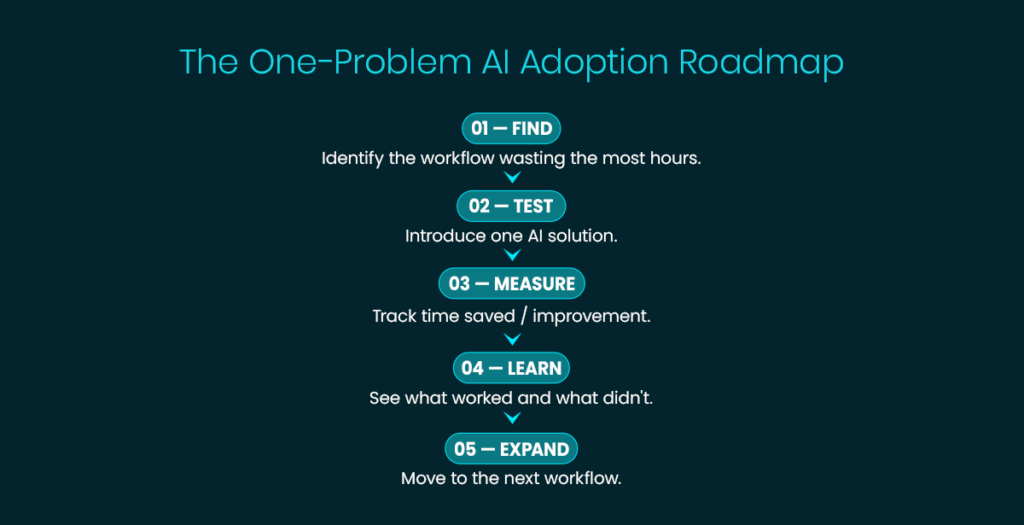
Real AI adoption for business starts small and specific. Pick the one workflow that wastes the most hours every week. Fix that first.

Our no-nonsense AI adoption roadmap walks through this exact sequencing for growth-stage teams. Start narrow, prove value, then expand.

Bigger companies often move slower here, not faster. Enterprise AI adoption stalls because layers of approval slow down even a simple pilot.

A smaller team can test, learn, and adjust fast. A large company might still be scheduling the kickoff meeting.
AI-driven workplace

Choosing AI Collaboration Tools Your Team Will Actually Use

Plenty of AI collaboration tools exist. Most get tried once and abandoned. The failure usually isn’t the tool. It’s the rollout.

Pick tools that plug into work your team already does, not tools that require a whole new process. A writing assistant inside your existing docs beats a separate app nobody opens.

Give people a real reason to use it daily, not a mandate to use it “when convenient.” Habits form around convenience, not policy memos.

Test with a small group first. Let them tell you what actually saves time before you roll anything out company-wide.

AI Workforce Transformation Means Redesigning Roles, Not Just Adding Tools

AI workforce transformation fails when companies treat it as a software rollout. It succeeds when companies redesign what a role actually does.

Our AI Lab whitepaper covers this in depth. The AI Lab model treats AI adoption as structured experimentation, not a one-time deployment. Ideation, MVP, then scaling, each stage validated before moving on.

A role redesigned around AI looks different. Less manual reporting, more judgment and oversight. That shift is the actual transformation, not the tool itself.

Human AI Collaboration Is a Skill Gap, Not a Tech Gap

Human AI collaboration is where most companies quietly stall. Deloitte’s 2026 research found something telling. Only 14% of leaders feel adept at shaping how people and AI work together, even as adoption keeps climbing.

That gap isn’t a technology problem. It’s a training and coaching problem.

Our piece on corporate AI training that goes beyond prompt engineering covers what real upskilling looks like. Prompting is a start, not the finish line.

Our AI upskilling workshop builds this skill directly with leadership teams, not just individual contributors.

Frequently Asked Questions

What makes a workplace actually AI-driven, versus just using AI tools?

An AI-driven workplace redesigns workflows around AI, not just software purchases. The test is whether removing the AI would break how work happens, not whether people opened the app once.

Where should a growth-stage company start with AI adoption for business?

Start with one high-friction workflow. Prove it works, measure the time saved, then expand to the next process. Skip the company-wide rollout on day one.

Do AI collaboration tools replace the need for new skills?

No. Tools without training create frustration, not transformation. Teams need both the tool and the coaching to use it well.

How long does AI workforce transformation actually take?

Longer than a quarter, shorter than most leaders assume. Role redesign around one workflow can show results in weeks. Company-wide transformation takes longer and happens in stages, not in one big announcement.

Who should own AI adoption inside a growth-stage company?

Someone close to the actual work, not a committee three layers removed from it. Ownership works best when the person driving adoption also feels the pain of the broken workflow.

Start With One Problem This Week

An AI-driven workplace isn’t built in a single sprint. It’s built one redesigned workflow at a time, starting with whatever wastes the most hours right now.

Human AI collaboration, AI workforce transformation, and real AI adoption for business come down to the same habit. Pick one problem, fix it for real, then move to the next.

Visit our Innovation Lab and see how we help teams run that first experiment. You won’t need to bet the whole roadmap on it.

AI for Business Leaders: What You Need to Know Before Your Competitor Figures It Out

Only 6% of companies qualify as real AI adoption leaders, according to BCG’s latest research. That small group posts a 9.3% return advantage over laggards. Everyone else sees almost no difference at all.

That gap is the whole story of AI for business leaders right now. A handful of companies pull ahead, and the rest compete for what’s left over.

This isn’t a call to panic-buy every AI tool on the market. It’s a call to build the specific skills, strategy, and sequencing that separate the 6% from everyone else. The good news is that none of those three things require a massive budget to start.

What they do require is a leader willing to make a real decision. Funding a dozen small experiments that never connect to each other isn’t a strategy. It’s expensive indecision.

What Does “AI for Business Leaders” Actually Mean?

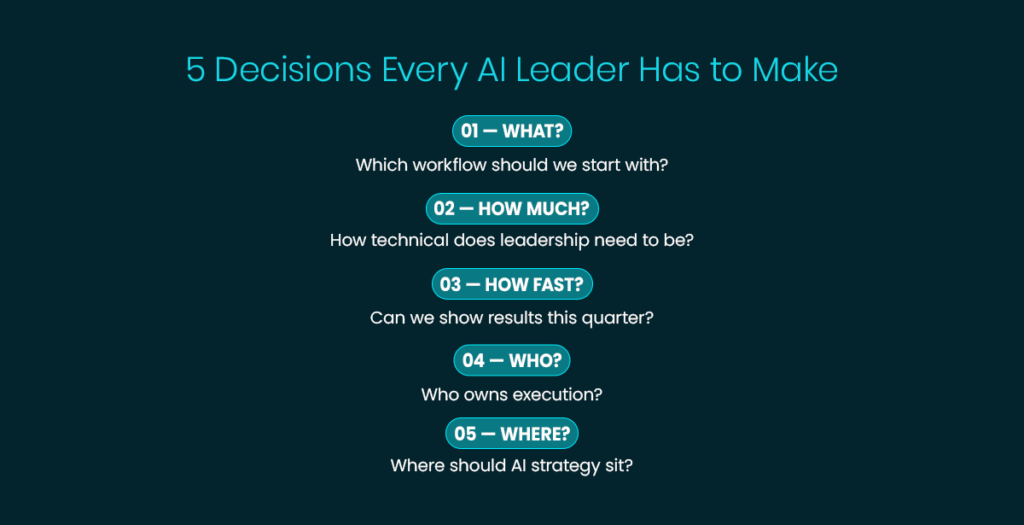
AI for business leaders isn’t about learning to prompt a chatbot. It’s about deciding where AI changes your competitive position and where it doesn’t.

A leader who understands this spends less time chasing every new tool. They spend more time deciding which three problems actually matter this year.

That distinction is what separates a leader with an AI strategy from a leader with an AI subscription. One drives decisions. The other just drives a bill.

Neither requires a technical background. Both require the discipline to say no to eight ideas so the ninth one actually gets the attention it needs.

The AI Leadership Skills Gap Nobody Wants to Admit To

The Conference Board found that 43% of executives now name AI as their top investment priority for 2026, ahead of product innovation. The budget is there.

The AI leadership skills usually aren’t. Investment without training and organizational redesign tends to underperform, no matter how large the check.

Most leaders can talk about AI at a conference. Fewer can actually direct where it should go inside their own company. That second skill is the one worth building first, and it doesn’t show up on a slide.

Building an AI Strategy for Executives That Isn’t Just a Slide Deck

A real AI strategy for executives names specific workflows, specific owners, and specific deadlines. A slide deck names “digital transformation” and calls it done.

Our strategic engagements page breaks down the actual formats this work can take. Options range from a single workshop to a full advisory retainer.

Pick the format that matches your actual bandwidth, not the one that looks most impressive in a board deck. A modest plan you finish beats an ambitious one that stalls in month two.

Executives who skip this step often end up with a strategy document nobody reads again after the kickoff meeting. A working plan gets referenced weekly, not filed away.

Why Your AI Transformation Strategy Needs a Sequence, Not a Wishlist

An AI transformation strategy fails fastest when it tries to fix everything simultaneously. Ten pilot projects launched in the same month usually means ten pilots that get half the attention each.

Our guide on building a future of work strategy that survives the AI shift walks through the sequencing that actually holds up. One workflow gets proven before the next one starts.

Sequence beats scope. A leader who sequences well ships results a board can point to, quarter after quarter.

Leadership in the AI Era Looks Different From Leadership in 2015

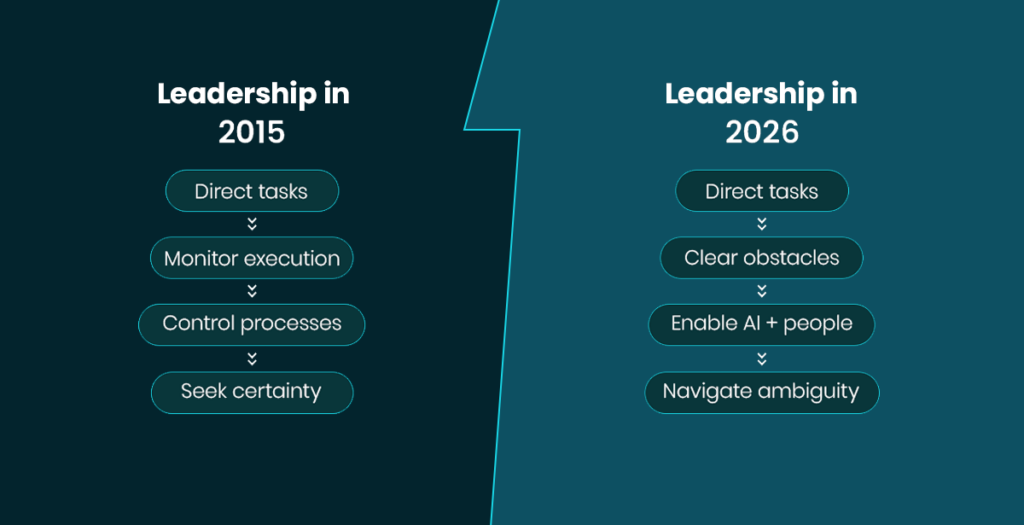
Leadership in the AI era rewards curiosity and comfort with ambiguity over control and certainty. The leader’s job shifts from directing tasks to setting direction and clearing obstacles.

Most leadership development programs still fail because they train leaders for a version of the job AI already changed. Our piece on executive leadership development in 2026 covers what actually needs to replace it.

The leaders who adapt fastest treat this shift as a skill to practice. It isn’t a personality trait some people simply have and others don’t.

AI Leadership

AI Business Transformation Rewards the Fast Movers

AI business transformation isn’t gentle to companies that wait for certainty. Enterprise AI adoption stalls at exactly the companies with the most resources to move fast.

The 6% of leaders BCG identified didn’t wait for a perfect plan. They picked a workflow, measured it, and built from there, then repeated that pattern until it compounded.

Your competitor reading this same research right now faces the same choice. The only real edge left is speed of execution, and speed compounds the same way returns do.

Frequently Asked Questions

What’s the biggest mistake business leaders make with AI strategy?

Treating it as a single big initiative instead of a sequence of small, proven wins. A sequenced approach builds real momentum. A single mega-project usually just builds a bigger failure.

Do business leaders need to understand the technical side of AI?

Not deeply. They need to understand where AI changes competitive position, then rely on technical experts for implementation. Direction matters more than depth here.

How fast should AI transformation strategy move?

Fast enough to show results within a quarter on one workflow. Full transformation happens in stages over a year or more, not in a single announcement.

Is AI business transformation different for smaller companies?

Smaller companies often move faster because they have fewer approval layers standing between a decision and its execution. Size isn’t the advantage here. Decision speed is.

Should AI strategy for executives live with the CEO or get delegated?

The CEO sets direction and removes roadblocks, but daily ownership works best closer to the actual work. Delegation without executive sponsorship tends to stall the moment budget gets tight.

AI Leadership

Start Before Your Competitor Does

AI for business leaders comes down to one uncomfortable truth. Waiting for certainty is itself a decision, and it’s usually the wrong one.

Leadership in the AI era, a real AI transformation strategy, and closing the AI leadership skills gap all point in the same direction. Pick one workflow, move on it now, and build from there.

Talk to our leadership consulting team and find out which workflow to pick first.

FAST-NUCES Faculty Get Hands-On AI-DLC Training as AI Reshapes Software Development

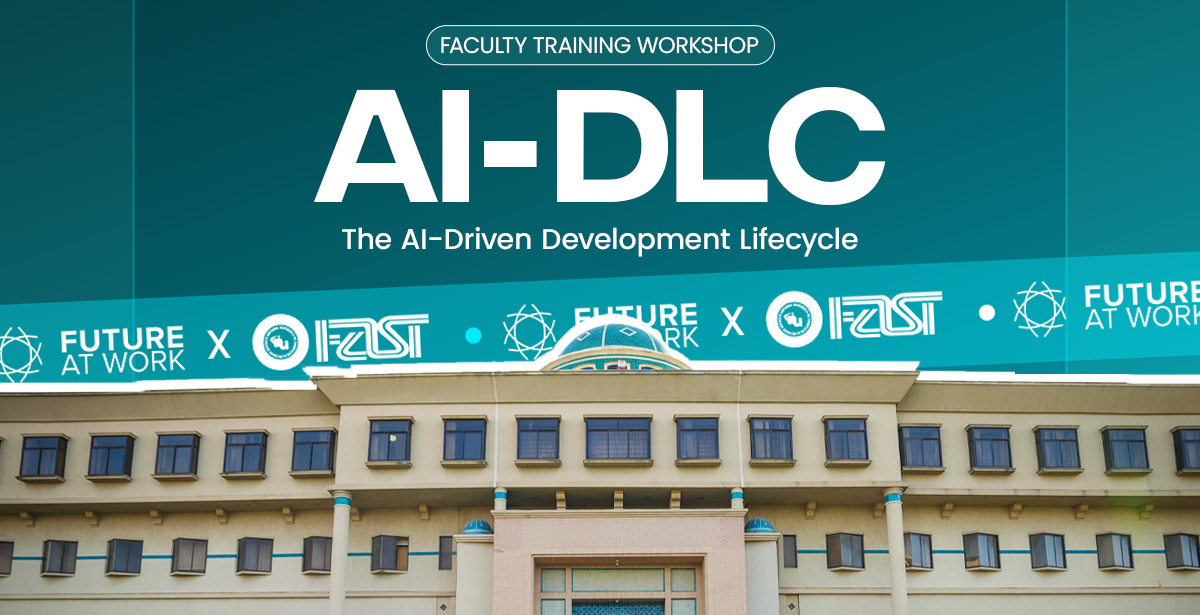
Future At Work conducted a hands-on, intensive training session for the Computer Science faculty at FAST-NUCES, Islamabad Campus, on Friday, August 21st, focused on AI-DLC (AI Development Life Cycle).

The session was led by mentors Nauman Faridi and Hazar Hayat, who took faculty through practical, real-world AI development workflows rather than limiting the session to theory. Dr. Arshad Islam, Head of the Computer Science Department, facilitated and hosted the session on behalf of FAST-NUCES.

The goal was straightforward: bring current, real-world AI practices directly into the classroom without waiting years for university curricula to catch up. Course updates can take one to three years, while AI tools and workflows evolve almost every week. The hands-on session helped bridge that gap in real time.

Faculty members remained highly engaged throughout the session, actively working through the material and showing strong eagerness to learn and apply the new tools themselves.

The initiative also reflects Dr. Arshad Islam’s ongoing push to keep the department aligned with industry trends. By training faculty directly, the impact extends far beyond one classroom, with every student these faculty members teach in the coming years standing to benefit from more current, hands-on knowledge.

FAST-NUCES, established in 2000 as Pakistan’s first multi-campus university, has long been recognized by the Higher Education Commission as the country’s top-ranked institution for computer science and information technology, making initiatives like this particularly meaningful for Pakistan’s wider technology education landscape.

Future At Work thanks FAST-NUCES and Dr. Arshad Islam for supporting this collaboration, alongside our partners Knowledge Future and DPL, and looks forward to continuing efforts that keep Pakistan’s computer science education aligned with real-world industry practice.

New Ways of Working: Why Pods and 3-Day Bolts Are Replacing Scrum Teams

New ways of working are pushing out the two-week sprint. AI agents draft code, test features, and analyze data in hours, not days. Waiting two weeks for a retro wastes that speed.

Forward-thinking companies already made the shift. They moved from Scrum sprints to pod-based execution. A pod pairs a handful of humans with AI agents. It ships work in three-day bolts instead of two-week sprints. Teams call this shift the ADLC, short for AI Development Lifecycle. It is quietly replacing the SDLC that shaped software work for two decades.

This article covers why Scrum is losing ground. It also covers what pods and bolts look like day to day, and how your team can start the shift.

Why Scrum Teams Struggle in an AI-Driven Workplace

Companies built Scrum for human-paced work. Sprint planning, daily standups, and retros all assume people write every line of code and make every call themselves. AI changes that math completely.

Most digital transformation programs still fail. Research puts the failure rate at 65% to 70%. A closer look at the root causes behind digital transformation failure shows the problem isn’t the tools. It’s a culture that resists experimentation, sitting on top of an old organizational structure.

Scrum teams inherit that same problem. Standups review yesterday’s work when an agent finished that work an hour ago. Sprint reviews make everyone wait two weeks to see something an AI could prototype in a single day. The rhythm no longer matches the pace of the work.

This is really a corporate DNA problem, not a Scrum problem. Companies with hierarchical, compliance-driven structures bolt AI onto old approval chains. Companies with startup DNA redesign the chain itself, and that’s where pods come from.

What Pods and 3-Day Bolts Actually Look Like

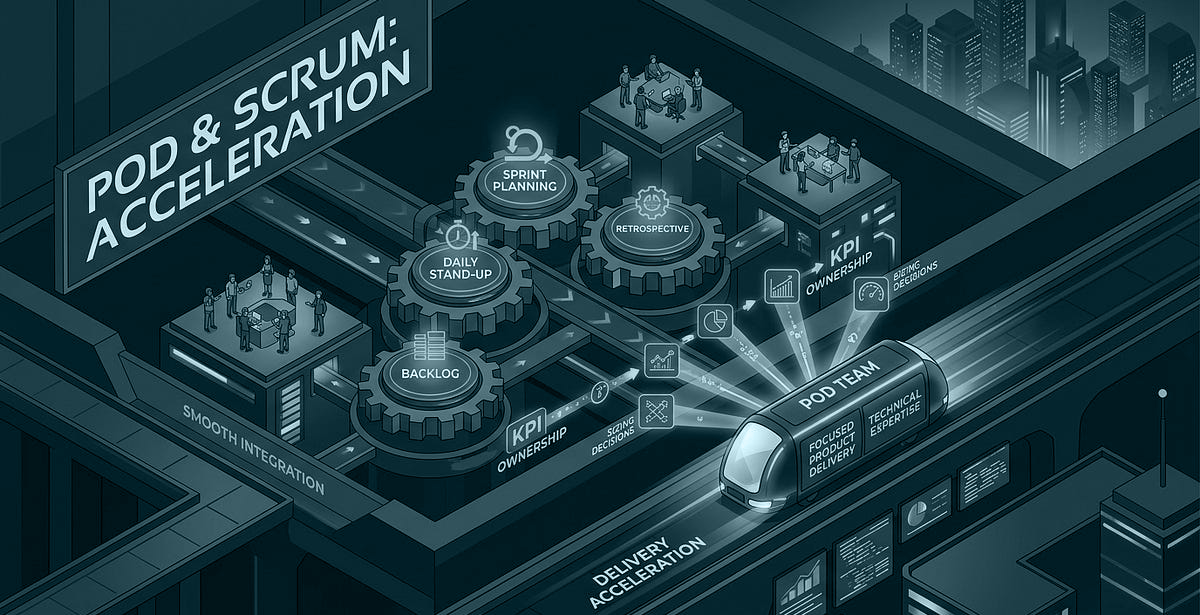
A pod is a small, cross-functional team. It mixes a few humans with one or more AI agents. It owns a problem end to end. There are no handoffs between departments and no waiting for another team’s sprint to line up.

Pods replace the usual Scrum lineup of product owner, scrum master, and specialists. A typical pod might pair one product thinker and one engineer with two or three AI agents. Those agents handle code generation, QA, and documentation. This mirrors the decentralized team structures many AI-native companies now use.

The 3-day bolt replaces the two-week sprint. A bolt starts with one clear, narrow goal. The pod builds, tests, and ships within three days, then picks its next bolt. This is agile with AI built into the operating model, not agile with AI added on top.

Team size isn’t the real story here. Deloitte’s research on team structure and AI outcomes found cross-functional teams were 30% more likely than others to report real efficiency and innovation gains from AI. The advantage comes from mixing skills tightly around agents. It doesn’t come from shrinking headcount for its own sake.

The Culture Shift Behind This Model

Pods only work when organizational culture change happens first. You can’t attach a pod to a rigid hierarchy and expect it to move at bolt speed. A pod needs real authority to decide, not just permission to build.

That shift is harder than most leaders expect. A 2026 survey of enterprise AI adoption found that 79% of organizations still face real challenges adopting AI, despite heavy investment. Many companies fund the tools but skip the culture work behind them. They keep the old approval chains in place and wonder why AI doesn’t speed anything up.

Trust breaks down fast when culture doesn’t shift alongside the technology. Employees who doubt the strategy start working around it instead of with it. That habit undermines every pod’s ability to move at bolt speed.

Distributed Leadership Replaces Command and Control

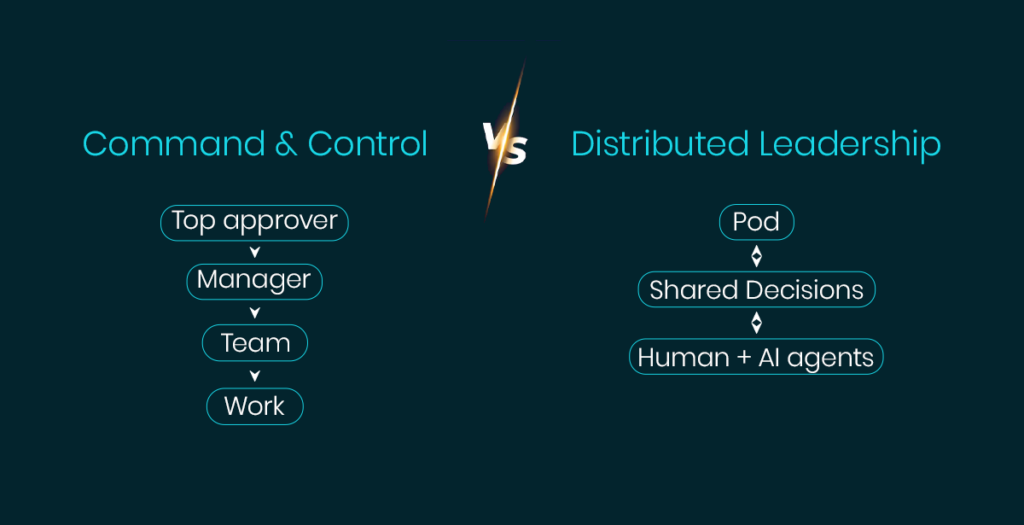
Pods need distributed leadership, not a single approver at the top. Each pod decides its own priority, scope, and trade-offs inside its three-day window.

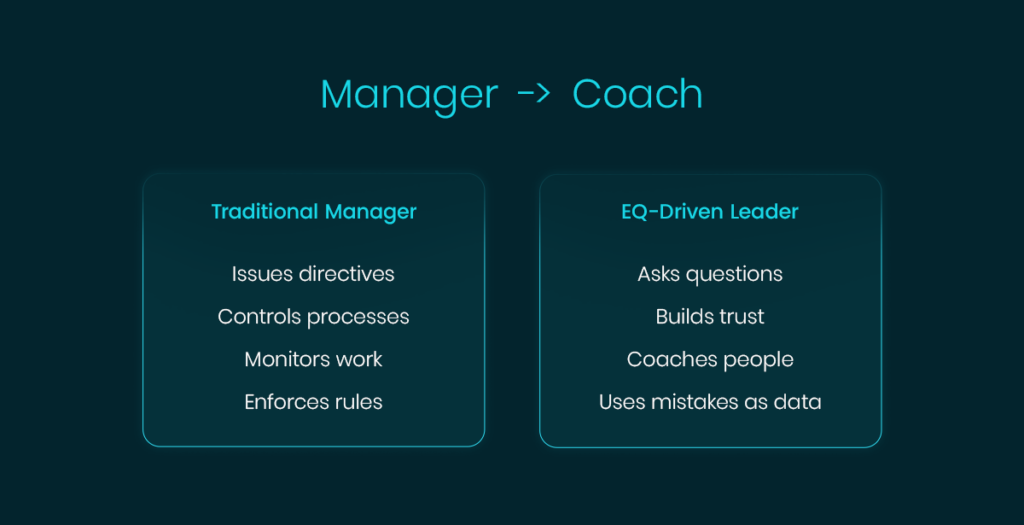
This asks more of managers, not less. Leaders need real emotional intelligence here. They have to trust a pod’s judgment instead of reviewing every decision themselves. Future At Work covers this exact skill in its EQ-driven leadership masterclass.

Command-and-control leadership simply can’t keep pace with a three-day cycle. By the time an approval chain finishes its review, the pod has already shipped the bolt.

new ways of working

New Ways of Working Start With One Pilot Pod

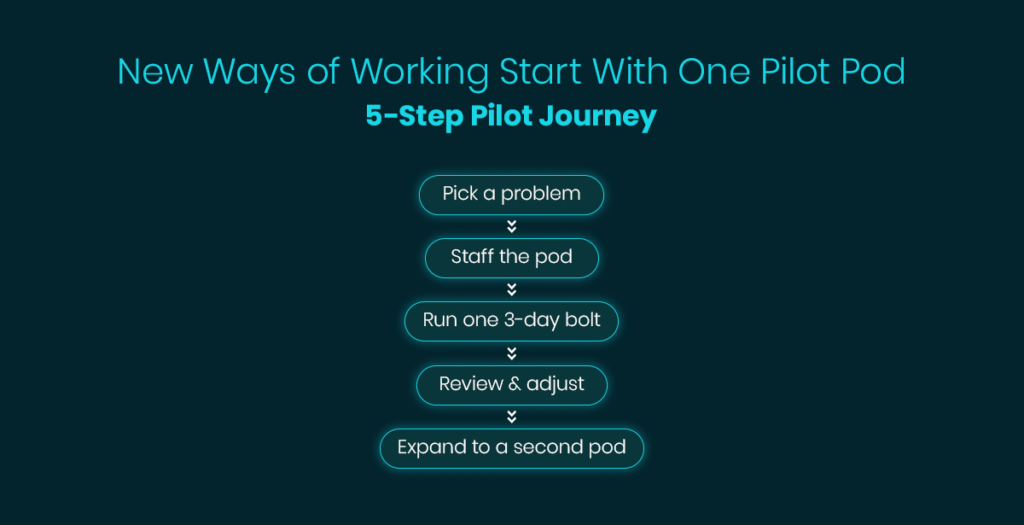
Don’t restructure your whole company overnight. Start with one pilot pod and learn from it. This kind of future of work AI shift works best as a pilot, not a company-wide mandate.

  1. Pick one problem a pod can own end to end.
  2. Staff it with two or three people and one or two AI agents.
  3. Run a single 3-day bolt and ship something real.
  4. Review what worked, then adjust the mix.
  5. Expand to a second pod once the first pilot proves itself.

Most rollouts stall right here. Companies try to convert every team to pods at once. That move triggers resistance instead of the fast learning a small pilot delivers. A structured pilot, run inside a program like Future At Work’s Innovation Lab, keeps risk small. It also keeps the lessons real.

new ways of working

Common Questions About Pods and 3-Day Bolts

How does a pod differ from a Scrum team?

A pod is smaller, and it includes AI agents as working members, not just tools. It owns outcomes end to end. A Scrum team follows fixed roles and a two-week rhythm instead.

Do 3-day bolts work for every kind of project?

No. Bolts fit discrete, shippable pieces of work well. Complex, multi-month initiatives still need a longer arc. Teams break that arc into a sequence of bolts instead of one long sprint.

Who leads a pod day to day?

No single person leads a pod the way a Scrum master leads a sprint. The pod shares that role. Each member, human or AI agent, owns the piece of the bolt they’re best suited for.

Conclusion

Scrum shaped the last two decades of software work. It won’t shape the next ten years. New ways of working, like pods and 3-day bolts, match how AI agents actually operate. They run fast, iterative, and always on.

Distributed leadership makes this possible. Without it, pods just become smaller versions of the same slow hierarchy.

The shift starts small. Pick one pod. Run one bolt. Learn from what happens. Companies that treat this as a real culture shift, not a tooling swap, end up with a future of work strategy that survives the AI shift. The ones that don’t will keep running sprints designed for a world that no longer exists.

Cross-Functional Team Structure for AI-Native Companies

Most companies build teams like factories build cars. One department finishes its piece, then passes the work down the line. That model breaks the moment AI enters the workflow. AI-native companies need a cross-functional team structure that puts designers, engineers, and AI agents together from day one.

This is not a cosmetic change to an org chart. It’s a different way to get work done.

Below, you’ll see how pods, self-organizing teams, and AI agile teams replace the assembly line. Founders who make this shift move faster than competitors stuck in legacy structures.

What Is a Cross-Functional Team Structure?

A cross-functional team structure groups people from different disciplines into one unit, aimed at one outcome. A single pod might include a product manager, an engineer, and a designer.

Now add an AI agent that handles research or QA. Nobody waits in a queue for another department to finish its part.

This structure exists because assembly-line thinking doesn’t work for knowledge work. Ford’s factory model made sense when workers repeated one task all day. It makes no sense when a task depends on five different skill sets at once.

Cross-functional teams cut handoffs. Fewer handoffs mean fewer delays and faster decisions. That’s the whole point.

Why Pod Team Structure Beats Traditional Scrum for AI Work

A pod team structure is the clearest expression of cross-functional thinking. A pod is small, usually four to seven people, and it owns a problem from start to finish. It never hands work to another team and waits.

Traditional Scrum teams still separate roles by ceremony. Sprint planning, backlog grooming, and retros get bolted onto a structure built for humans only.

Pods assume something different. They assume AI agents sit inside the team, not outside it. Agents do research, draft code, or flag risks before a human opens the ticket.

We call this shift ADLC, the AI Development Lifecycle. It replaces the two-week sprint with a three-day bolt. Short cycles work because AI agents turn around research and drafts in hours, not days.

The Agile Organizational Structure Trap Most Companies Fall Into

Plenty of companies say they run an agile organizational structure. Few actually do. They keep the standups and the kanban board, but decision rights still sit three layers up.

A team can’t ship a feature without a director’s sign-off. That’s not agile. That’s corporate DNA wearing an agile costume.

Real agility means the pod decides. The people closest to the customer, the code, and the AI tooling make the call. Not the people three layers removed. That’s the gap between agile in name and agile in practice.

McKinsey’s State of Organizations 2026 report backs this up. Thirty-eight percent of leaders call rigid structures and processes their biggest obstacle to change. That number should worry any founder who thinks renaming a hierarchy “agile” fixes it.

Read more on why your agile organizational structure isn’t actually agile.

Self-Organizing Teams: The Real Engine of Ownership

Self-organizing teams don’t wait for a manager to assign the next task. They see the problem, split the work, and move. This only works when trust replaces control as the default.

History backs this up too. Lessons from the self-organized State of Medina show what happens when people take ownership without being told to. Clear principles replaced constant oversight, and the system still delivered results.

The same logic applies inside a company. Give a pod a clear outcome and the guardrails it needs, then get out of the way.

Self-organizing teams that understand the mission make better calls, faster, than any manager relaying instructions from three meetings away.

Building an AI Team Structure: Humans and Agents in One Pod

An AI team structure treats agents as teammates, not tools bolted onto a workflow. A pod might assign an agent to draft a spec or flag edge cases in QA.

Another agent can summarize customer feedback before a human touches it. AI agile teams still need human judgment for context and trade-offs, but the balance shifts.

MIT Sloan Management Review and BCG call this the emerging “agentic enterprise.” Structures must balance human and AI contributors, not treat AI as an afterthought.

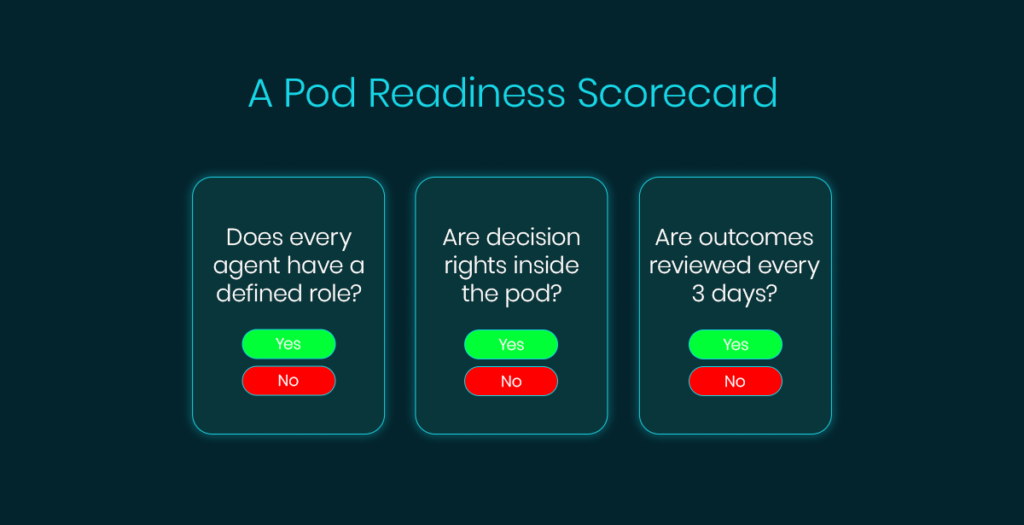
Three steps get a team there:

  1. Give every pod at least one AI agent with a defined role, not a vague “use AI more” mandate.
  2. Set decision rights inside the pod, so nobody waits on approval from outside it.
  3. Review outcomes every three days instead of every two weeks. Fast cycles catch problems early.
Cross-Functional Team Structure

Frequently Asked Questions

What’s the difference between a pod and a Scrum team?

A pod owns a problem end to end and includes AI agents as working members. A Scrum team follows fixed ceremonies and usually separates roles by department, even when it calls itself agile.

How many people belong in a cross-functional team structure?

Most pods work best with four to seven people. Add an AI agent or two for research, QA, or drafting. Keep the group small enough to talk without a meeting.

Do self-organizing teams need a manager at all?

Yes, but the manager’s job changes. Instead of assigning tasks, they set outcomes, remove blockers, and coach. The team decides how the work gets done.

Why do AI-native companies choose pods over traditional departments?

Pods cut the handoffs that slow departments down. A pod owns its outcome, uses AI agents for research and drafting, and ships without waiting on sign-off from three other teams.

Start Building Your Pod

Cross-functional team structure isn’t a trend. It’s the operating model that lets AI-native companies out-execute competitors still running assembly-line playbooks.

Pods, self-organizing teams, and AI agile teams work together for one reason. Ownership sits with the people doing the work, not the layers above them.

If your org chart routes every decision through five approvals, the structure is the problem, not your people. That’s what an AI-native operating model actually looks like in practice.

Book a discovery workshop and find out where your team can start moving like a pod instead of a department.

Transformational Leadership in 2026: Leading Through the AI Revolution

AI can write code, draft a contract, or analyze a spreadsheet in seconds. It cannot decide what your company stands for.

It cannot make a scared team feel safe enough to take a risk. That’s still a human job. It’s why transformational leadership matters more in 2026 than it did five years ago.

Most leadership advice from the last decade assumes a stable org chart and a predictable market. Neither exists anymore. Founders now need a leadership mindset built for constant change, not quarterly planning cycles.

This piece breaks down what that kind of leadership actually requires today. It builds on lessons from our masterclass on EQ-driven leadership, and it covers servant leadership habits, real leadership development, and the leadership transformation that survives contact with AI.

What Is Transformational Leadership?

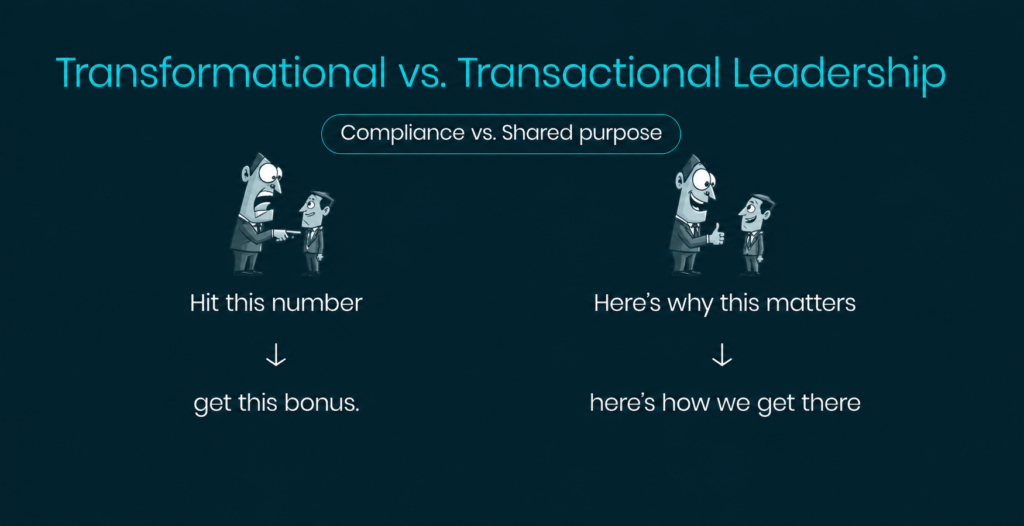
Transformational leadership is a style where a leader inspires people to exceed their own expectations, not just hit a target. The leader models the change first, then invites the team to follow.

This differs from transactional leadership, which trades rewards for compliance. A transactional manager says, “Hit this number, get this bonus.” A transformational leader says something different: “Here’s why this matters, and here’s how we get there.” Both styles have a place, but only one builds loyalty that survives a hard quarter.

The AI revolution makes this style non-negotiable. When machines handle routine execution, the human job shifts to vision, judgment, and trust. That’s where this leadership style earns its keep.

Founders who lead this way build teams that adapt fast. People trust the direction even when the plan changes mid-quarter, and that trust is what keeps a team moving instead of freezing.

Transformational Leadership in 2026

Why Leadership Transformation Can’t Wait for the Next Reorg

Leadership transformation used to happen on a schedule: a new title, a training program, maybe an offsite. That timeline doesn’t work anymore.

AI changes job descriptions every quarter, not every five years. A leader who waits for the “right moment” to change how they lead will run out of moment.

Most leadership development programs still fail because they train for a version of the job that already changed. Leadership transformation has to happen alongside the work, not in a separate room once a year.

Small, constant adjustments beat one big overhaul. A leader who reviews their own habits monthly stays closer to how the team actually works.

Servant Leadership Is the Foundation AI-Native Teams Need

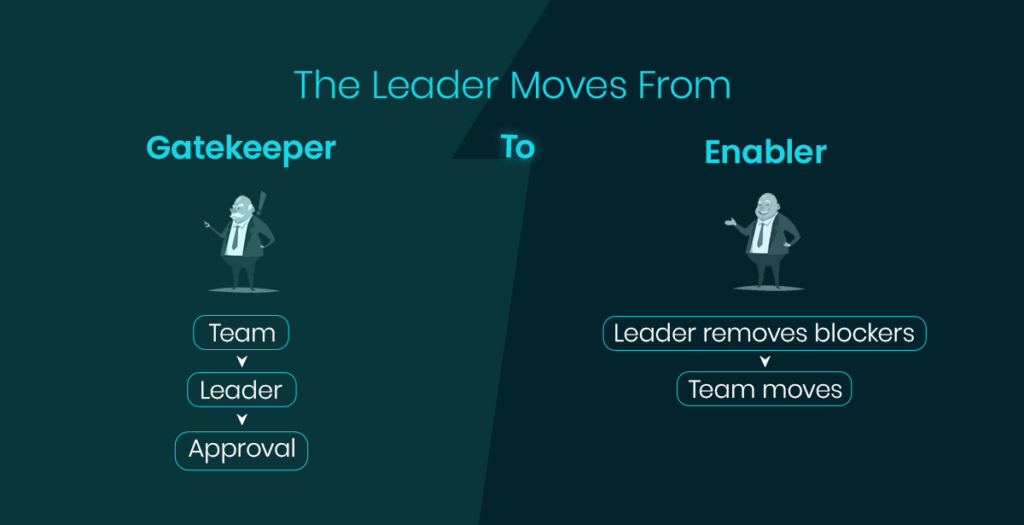
Servant leadership flips the usual hierarchy. The leader’s job is to remove obstacles for the team, not sit above it and issue orders.

This matters more now because AI-native teams move fast. A pod can’t wait three days for a director to approve a decision. The leader’s role becomes clearing the path, not gating it.

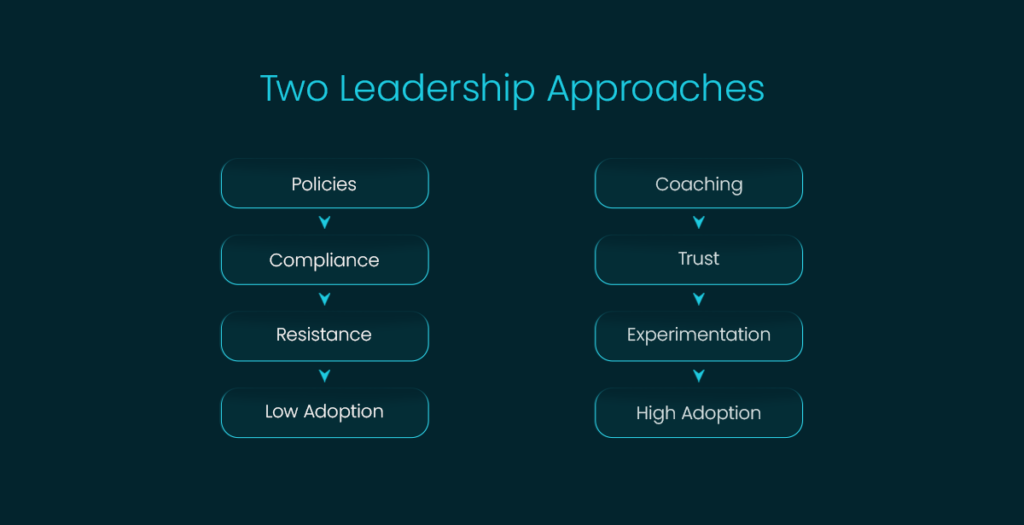
Coaching, not policy enforcement, is what servant leadership looks like day to day. A servant leader asks better questions instead of writing more rules.

That shift feels uncomfortable for leaders trained to command. It pays off fast once a team starts solving problems without waiting for permission.

Transformational Leadership in 2026

Why Executive Leadership Coaching Matters More in the AI Era

Executive leadership coaching used to be a perk reserved for the C-suite. That’s changing, and the data explains why.

According to the International Coaching Federation, 87% of surveyed leaders say executive coaching delivers a strong return on investment. Companies that pair coaching with structured leadership development see the gains compound, not just add up.

Coaching works because it targets behavior, not just knowledge. A workshop teaches a leader what to do. Coaching helps them do it under pressure, which is where most leadership habits break down.

Founders often resist coaching because they think it’s a sign of weakness. In practice, it’s closer to the way athletes use a coach: to sharpen skill that’s already there.

Most executive leadership coaching engagements run for three to six months, with regular check-ins tied to real decisions the leader is facing that week. That structure is what makes the behavior change stick, instead of fading out once the workshop ends.

Building a Leadership Mindset Through Real Leadership Development

A leadership mindset isn’t a personality trait. It’s a set of habits: curiosity, comfort with ambiguity, and the willingness to say “I don’t know yet.”

Gallup’s research found something worth sitting with. Manager quality explains 70% of the variance in team engagement. That single number should reset how every company budgets for leadership development.

Leadership development that builds this mindset looks less like a lecture series and more like practice. Real decisions, real feedback, and real stakes teach faster than theory.

Our guide on building a culture of innovation covers how to create the conditions for that kind of practice.

Frequently Asked Questions

What’s the difference between transformational and transactional leadership?

Transformational leadership inspires people toward a shared vision. Transactional leadership trades rewards for specific results. Most AI-era teams need both, but this style carries more weight now.

Can servant leadership work in a fast-moving, AI-native company?

Yes. Servant leadership speeds things up because the leader removes blockers instead of adding approval steps. Fast teams need leaders who clear the path, not guard it.

Does executive leadership coaching really change behavior?

It does, when paired with accountability. Coaching targets specific behaviors under real pressure, and that sticks better than a one-time workshop.

How do you build a leadership mindset if you weren’t born with one?

You practice it. Leadership mindset develops through real decisions, tight feedback loops, and coaching, not personality tests.

Start Your Leadership Transformation

Transformational leadership isn’t a soft skill anymore. It’s the operating skill that decides whether your company adapts to AI or loses ground to a competitor who did.

Leadership transformation, servant leadership, and real leadership development aren’t three separate initiatives. They’re one shift. It’s about leading people the way AI-native work actually demands.

Talk to our leadership consulting team and find out where your leadership style needs to change first. The sooner you start, the less catching up you’ll do later.

7 Future of Work Trends That Will Separate Winners From the Rest in 2026

Most companies still run on assembly-line thinking. They break work into narrow tasks. They reward compliance over judgment. That model built the 20th century, but it cannot survive the AI era.

The future of work trends shaping 2026 reward a different kind of organization. Winners build lean, trust-based teams that pair humans with AI agents. Laggards keep patching old hierarchies with new tools, then wonder why nothing changes.

Workplace trends 2025 already hinted at this shift. The World Economic Forum’s Future of Jobs Report projects a 39% shift in core job skills by 2030. Gartner found something sharper: only 1 in 50 AI initiatives actually delivers transformative value.

The gap between hype and results is where winners separate from everyone else. Here are the seven shifts that matter most this year.

1. AI-Native Pods Replace Traditional Teams

Scrum teams built for predictable software cycles struggle with AI-speed work. Pods solve this problem. A pod is a small, cross-functional team of humans and AI agents working toward one outcome.

Pods make decisions fast. They skip the layers of approval that slow corporate teams down. Our breakdown of AI agile methodology replacing Scrum at forward-thinking companies explains this shift. It shows how pods work in real organizations.

2. Three-Day Bolts Replace Two-Week Sprints

The traditional sprint assumes slow feedback loops. AI breaks that assumption. Teams can now prototype, test, and ship in three days instead of two weeks.

This is the core of the ADLC, or AI Development Lifecycle. It is the framework replacing SDLC across forward-thinking companies. Shorter cycles mean faster learning and fewer sunk-cost projects. Read our full explanation of the shift from SDLC to ADLC for the mechanics behind it.

3. EQ-Driven Leadership Becomes Non-Negotiable

Process cannot replace judgment. Leaders need emotional intelligence more than ever as AI takes over repetitive tasks. They must read people, build trust, and coach instead of controlling.

Gartner’s research backs this up. Bolting AI onto old workflows is not enough. Teams that redesign workflows around AI are twice as likely to beat their revenue goals. That redesign work depends on leaders who understand people, not just processes. Our Executive Leadership Development in 2026 piece covers what this looks like in practice.

What does EQ-driven leadership look like day to day? It looks like managers who ask questions instead of issuing directives. They give feedback in real time. They treat mistakes as data, not failures.

future at work

4. Future of Work Skills Center on AI Fluency

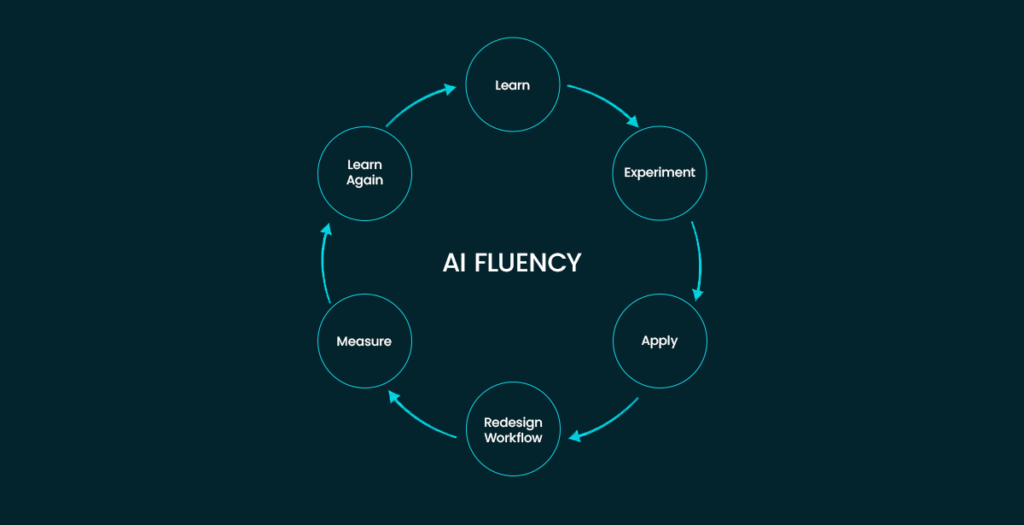
A single workshop does not build lasting AI fluency. The half-life of technical skills keeps shrinking, so upskilling has to become continuous, not a checkbox.

The future of work skills gap is real and growing. AI and big data literacy now rank as the fastest-growing skill category through 2030. Companies that treat this as a habit will out-innovate those that treat it as a one-time event.

Basic prompt engineering training is not enough anymore. Employees need to redesign their own workflows around AI tools, not just write better prompts.

future at work

5. Flat, Pod-Based Structures Outperform Hierarchies

Corporate DNA layers approvals, titles, and committees between an idea and its execution. Startup DNA flattens that structure, so decisions happen closer to the work.

This does not mean chaos. It means clear ownership at the team level instead of centralized control at the top. Pods maintain accountability without a traditional chain of command.

Large enterprises often move slower here. It is not because they lack resources. Their structures were built for a different era. They keep layering new AI tools onto decades-old hierarchies instead of redesigning them.

6. Human-Agent Collaboration Becomes a Core Skill

Working alongside AI agents is now a baseline expectation, not a specialized skill. Employees need to know when to trust an AI output and when to override it.

Gartner calls sloppy, uncorrected AI output “workslop.” It is already costing companies real time and credibility. Winners train their people to catch this early, while losers let it pile up in customer-facing work.

This shift also changes hiring. Future workforce trends favor employees who can direct AI agents effectively, not just avoid them.

7. Radical Transparency Replaces Policy Enforcement

Rigid policies do not build trust. They signal that leadership does not trust its own people. Transparency has become the substitute for constant oversight, since remote and hybrid work are now permanent fixtures.

Companies that share real numbers, real reasoning, and real constraints with their teams see stronger retention and faster execution. Our article on why coaching will replace policy enforcement breaks down what this looks like in practice.

Want a structured way to test where your organization stands? Our Discovery Workshop walks leadership teams through this kind of assessment.

The Bottom Line on Future of Work Trends

Future of work trends in 2026 reward organizations that act on evidence, not hype. The data backs this up. Gartner found that fewer than 1% of recent layoffs came from real productivity gains. Most AI-driven cuts were bets, not results.

This is the work trends AI conversation in a nutshell: adopt with discipline, or adopt for show. Winners will build pods instead of hierarchies. They will coach instead of enforce. They will treat AI upskilling as continuous work, not a one-time event.

Start with one shift from this list. Pick the one your organization resists the most. That resistance usually points to where the biggest gain is waiting.

Ready to see where your organization actually stands? Our AI Upskilling Workshop gives leadership teams a practical starting point, grounded in real skill-building instead of buzzwords.

Frequently Asked Questions

What are the biggest future of work trends for 2026?

The biggest trends include AI-native pods, continuous upskilling, EQ-driven leadership, and flatter structures that speed up decisions.

Why do most digital transformations fail?

Research shows 65–70% of digital transformations fail. The main causes are cultures that resist experimentation and structures that layer new tech onto old hierarchies.

How is AI changing workplace skills?

The World Economic Forum projects that 39% of core job skills will change by 2030. AI and big data literacy now rank among the fastest-growing skills employers want.

Agentic AI in Business: What Happens When Your AI Starts Making Decisions

Agentic AI in business is no longer a research demo. It’s live in procurement systems, customer service queues, and financial approval chains. These systems don’t just answer questions. They take actions, chain tasks together, and make calls that used to require a human sign-off.

Gartner expects task-specific AI agents to sit inside 40% of enterprise applications by the end of 2026. That’s up from under 5% a year earlier, a fast climb for something most leadership teams haven’t fully planned for.

The real question isn’t whether your AI will start making decisions. It already has, somewhere in your stack. The question is whether you’ve built the structure and oversight to handle it. That’s what separates an AI-native company from one that bolted AI onto an old operating model.

What Does It Mean When AI Starts Making Decisions?

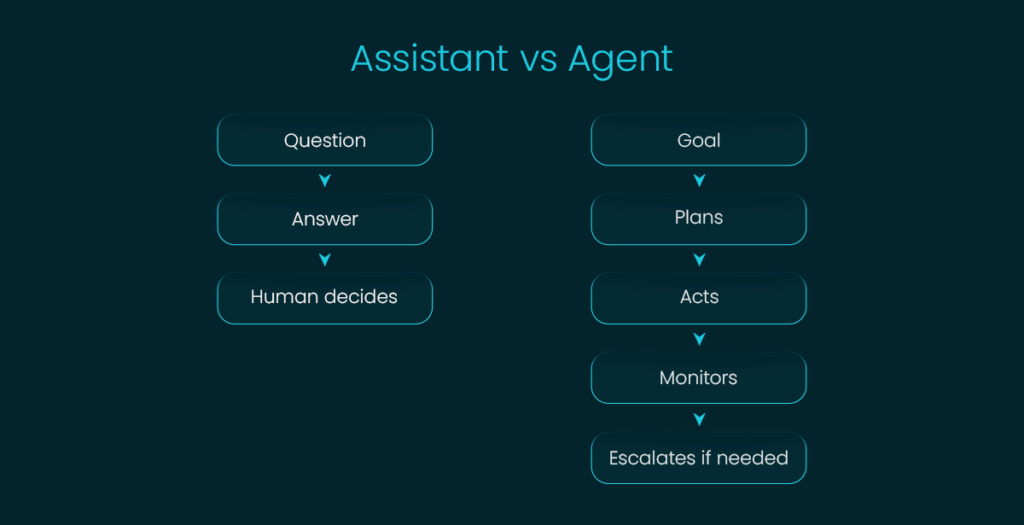
Agentic AI is software that plans, acts, and adjusts without waiting for a human at every step. A traditional AI tool answers a question. An agentic system decides what to do next and executes it. It loops in a person only when something falls outside its rules.

That distinction matters more than it sounds. Once an AI agent approves a refund, reroutes a shipment, or flags a hire, it has crossed a line. It moved from assistant to actor. Your business now has a non-human decision-maker on the payroll, in effect.

This is the heart of agentic AI in business: authority, not just intelligence, is shifting to machines.

Agentic AI

How Fast Is Agentic AI Moving in Business?

Adoption is accelerating fast. Gartner tracks this shift in its 2026 Hype Cycle for Agentic AI. The report shows task-specific agents climbing quickly, moving from under 5% of enterprise applications in 2025 toward 40% by the end of 2026.

Deloitte separately found that autonomous agent deployment will double among generative AI users. It grows from 25% in 2025 to 50% by 2027.

That pace creates a problem most leadership teams underestimate. Deloitte’s research on why AI agents are scaling faster than their guardrails found a gap. Only 21% of organizations have a mature governance model for autonomous agents. The rest are letting agents act before deciding who’s accountable when something goes wrong.

Building an AI-Native Company vs. Bolting AI On

An AI-native company designs its workflows around agents from the start. A company that bolts AI onto legacy processes just automates the same broken structure, faster.

The difference shows up first in how decisions get made. In a bolted-on setup, an agent drafts a recommendation. A manager approves it inside the same rigid hierarchy that existed before.

In an AI-native setup, the agent has clear boundaries and real authority within them. That’s the core distinction between an AI first organization and one running old playbooks with new tools.

This is also why the biggest companies tend to move slowest on agentic AI. Legacy hierarchies weren’t built to grant a machine decision rights. Rewriting them takes more courage than budget.

Future At Work’s AI Lab framework treats this shift as three stages: ideation, MVP development, and governed scaling. Skipping straight to scaling without validating an agent’s judgment is a common mistake. It’s exactly how most digital transformations fail, and agentic AI in business is no exception.

Managing AI Agents: New Team Structures for a New Kind of Worker

Managing AI agents isn’t a software problem. It’s a team design problem. Traditional Scrum teams weren’t built to include a non-human member that acts autonomously between stand-ups.

This is why forward-thinking companies are replacing two-week sprints with three-day bolts. The work runs through pods: small teams of humans and agents working side by side.

Future At Work breaks this down in its piece on AI agile methodology replacing Scrum. It also covers the underlying team design in decentralized, pod-based team structures.

The shift isn’t about adding an AI tool to an existing team. It’s about redesigning who owns which decisions. Managing AI agents works like managing any new hire: clear scope, feedback loops, and consequences.

Human-AI Collaboration: Who’s Actually Accountable?

Human AI collaboration works only when accountability stays human, even as execution becomes shared. An agent can recommend, act, and even learn. It cannot own the outcome the way a person can.

Leaders who get this wrong tend to repeat an old mistake: promoting technical capability without matching judgment. Future At Work’s work on executive leadership development for AI-era leaders makes a clear case. EQ, not technical fluency, decides whether human-AI collaboration works at scale.

Companies that treat this as a values shift, not just a technology rollout, see it stick. That’s where real AI business transformation happens.

Frequently Asked Questions

Do AI agents make decisions without any human oversight?

No. Most agentic AI systems in business operate inside defined rules and escalate anything outside them. Good systems design the oversight in, rather than bolting it on afterward.

What’s the first step toward becoming an AI-native company?

Start small. Map one workflow where an agent could safely own a decision. Test it in a contained environment, then expand once it proves reliable.

How is managing AI agents different from managing software?

Software executes fixed rules. AI agents interpret situations and choose actions. That means agents need ongoing feedback, monitoring, and clear escalation paths, much like a junior employee.

The Real Work Starts Now

Agentic AI in business isn’t a future scenario. It’s already approving refunds, screening resumes, and rerouting logistics inside companies that haven’t updated their org charts to match.

The organizations that win this shift won’t be the ones with the most advanced models. They’ll be the ones that redesigned team structures and built real governance. They trusted people to manage AI agents as seriously as they manage each other.

If you’re not sure where your organization stands, start with a discovery workshop. It’s a practical way to map where agent authority already exists. It also shows where a human still needs to stay in the loop.

The 4 Future of Work Challenges No One Is Talking About

The future of work AI conversation is loud right now, but most of it misses the point. Everyone debates tools. Few talk about the real future of work challenges hiding underneath. These are broken adoption habits, brittle culture, and leaders who manage change like it’s 2015.

Ask ten founders where their AI rollout stalled. Most blame the technology. They’re wrong. Gartner predicts organizations will cancel more than 40% of agentic AI projects by 2027. The reason is rarely the model. It’s unclear ownership, weak governance, and teams that never changed how they actually work.

That’s the pattern behind every one of the four challenges below. Each one gets discussed in isolation. Almost no one connects them. Here’s what’s actually holding organizations back, and what to do about it.

1. AI Adoption Challenges Run Deeper Than the Tools

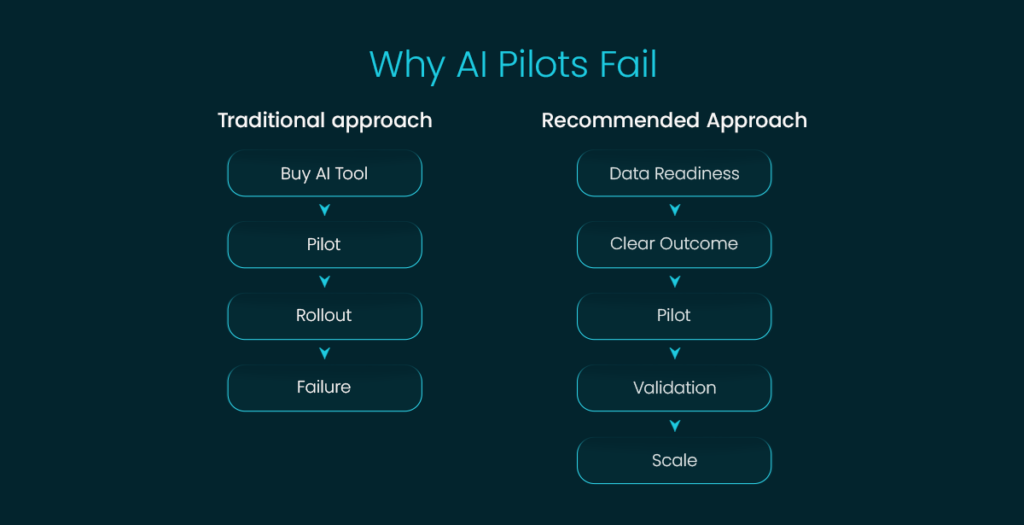
Most companies treat AI adoption as a shopping list. Pick a tool, run a pilot, hope it sticks. That approach explains why so many pilots quietly die.

MIT’s Project NANDA found that 95% of generative AI pilots produce no measurable return. The problem isn’t the model. It’s data readiness, unclear goals, and old workflows that never changed to fit new tools. Layer a smart tool on top of a broken process, and the process wins every time.

Real AI adoption challenges start with structure, not software. Our AI Adoption Roadmap for Growth-Stage Companies walks through the sequence that actually works. Audit your data first. Define one measurable outcome. Then build.

The AI Lab model solves this differently. Instead of one big rollout, it moves through three stages: ideation, MVP, and validated scaling.

Each stage has a gate. Nothing scales until it proves real value first. That structure alone counters the 65 to 70% failure rate common in traditional digital transformation efforts.

future of work

2. Organizational Culture Change Can’t Be Optional

You can buy the best AI stack on the market. It won’t matter if your culture still runs on fear and hierarchy.

Most organizations operate on what we call corporate DNA. It’s process-heavy and risk-averse. It’s built for compliance instead of speed. That model made sense on an assembly line. It fails inside a knowledge organization trying to move fast with AI.

Organizational culture change means shifting toward startup DNA. Think flat structures, fast decisions, and people who own outcomes instead of waiting for approval. Our piece on why agile structures still act like hierarchies breaks down the gap. Many companies claim agility. Few actually practice it.

This shift isn’t cosmetic. Teams with real ownership adapt to new tools faster. Teams run by fear just wait for permission, and permission is slow.

3. Workforce Transformation Needs More Than a Training Budget

Here’s a stat worth sitting with. The World Economic Forum projects that 39% of workers’ core skills will change by 2030. AI is the main driver, as it moves from experimentation into daily workflows.

Most companies respond with a single training session and call it done. That’s not workforce transformation. That’s a checkbox.

Real transformation means redesigning roles around what AI can now do, and what only humans still do well. It means building pods. Pods are small, cross-functional teams that pair people with AI agents. They replace rigid job descriptions and slow-moving Scrum teams.

We built our AI Upskilling Workshop around this exact gap. It goes past prompt basics. It focuses on how teams actually restructure work once AI joins the team as a working member, not just a tool.

4. AI Change Management Is a People Problem First

The fourth challenge is the one leaders avoid most. It’s managing the human side of change.

Policies and mandates don’t build trust. They just create compliance theater. Employees follow the letter of the rule while ignoring its spirit entirely.

AI change management works differently. It replaces enforcement with coaching. Leaders explain the why. They model the behavior themselves. They give people room to experiment without fear of punishment for an honest failure.

We cover this shift in The Future of HR: Why Coaching Will Replace Policy Enforcement. The short version is simple. People adopt change faster when they trust the person asking them to change.

future of work

What Actually Comes Next

These four future of work challenges share one root cause. Leaders treat AI as a technology problem. It’s actually an organizational one.

Fix the data and workflow gaps. Shift the culture toward ownership. Redesign roles around real skills, not old titles. Lead the change instead of mandating it. Do all four, and AI adoption stops being a gamble.

Common question: Why do most AI initiatives fail even with a good budget?

Money doesn’t fix broken workflows or a fearful culture. Most failures trace back to unclear ownership and no measurable goal. Add teams that never changed how they operate day to day, and failure becomes the default outcome, not the exception.

Common question: What’s the fastest way to start fixing this?

Start small and start honest. Pick one team, one workflow, and one clear outcome. Measure it before you scale anything further.

Ready to see where your organization actually stands? Start with a Discovery Workshop. You’ll get a clear read on your readiness before you spend another dollar on tools.