





AI Change Management: How to Move Your People Without Losing Them

Most AI rollouts fail for one reason. Leaders change the tools first and the people last. AI change management flips that order. It puts your people at the center of every technology decision, not at the end of it.

Founders who get this right build teams that move fast with AI. Founders who skip it lose their best people right when they need them most.

This guide breaks down why the process fails. It also covers what the shift actually requires and how to build a strategy that keeps your team intact.

Why AI Change Management Fails Before It Starts

This work means guiding people, roles, and culture through an AI transition. It is not just installing new software and hoping people catch up. Most leaders treat AI like an IT rollout instead of a people transition. That mistake costs them their best talent.

Only 27% of executives have a comprehensive AI strategy. Just 20% believe their own workforce is truly ready for AI. Leaders often mistake basic tool adoption for real transformation.

Gartner calls this pattern the enablement illusion. Teams get access to a new AI tool. But nothing about how they actually work changes underneath it. Usage numbers go up, dashboards look good, and leadership declares victory too soon.

Meanwhile, employees quietly disengage. No one addressed how their daily work, incentives, or career paths actually shift. The stakes here are real and growing every quarter.

Gartner predicts a sobering outcome for 2027. Half of enterprises without a people-centric AI strategy will lose their top AI talent to competitors. Your best engineers and operators will leave for companies that invest in them, not just in tools.

The Real AI Adoption Challenges Leaders Face

AI adoption challenges rarely start with the technology itself. They start with fear, and fear is a people problem, not a technical one. Leaders who skip this reality end up solving the wrong problem entirely.

Fear of Replacement

Employees hear “AI transformation” and think “job cuts.” That fear is not irrational. Some companies have used AI as cover for layoffs, and word travels fast between industries.

Once trust breaks, employees stop sharing honest feedback about what actually works. Leaders need to name this fear directly instead of ignoring it. Silence breeds worse rumors than the truth ever does.

Tell people clearly and early what will change and what will stay the same. Companies that get ahead of this fear usually share one trait. They treat honest, two-way communication as a discipline, not a one-time announcement.

That habit forms the foundation of a genuine culture of innovation. Employees feel safe raising concerns instead of burying them. Safety, not policy, is what actually keeps people talking honestly.

Fear like this rarely stays quiet for long. It shows up later as disengagement, and disengagement often turns into resignation. The Great Resignation proved how fast talented people leave once trust erodes inside a company.

Skill Gaps and Confidence Loss

Many employees feel behind before they even start. They worry AI tools require skills they simply do not have yet. This gap creates quiet disengagement long before anyone raises a hand to object out loud.

Left unaddressed, that quiet disengagement spreads fast through an entire team. It rarely announces itself in a meeting.

Confidence, not just competence, drives real adoption. People need small, visible wins early in the process. Short, guided practice sessions work far better than long manuals or generic courses ever do.

A well-run AI upskilling workshop builds both skill and confidence at the same time. That combination matters more than either one alone.

Leaders Who Model Resistance

Some executives quietly resist AI themselves while asking their teams to embrace it fully. Employees notice this gap almost immediately. If leadership will not use the tools daily, why should anyone else bother?

What AI Organizational Change Actually Requires

AI organizational change is not a training problem. It is a structural one. New tools rarely fit neatly inside old hierarchies and rigid reporting lines built for a different era.

Traditional org charts assume tasks stay fixed and roles stay narrow forever. AI breaks that assumption fast and without much warning. A single person with the right AI tools can now do the work of an entire team. Five years ago, that same output took many more people.

This calls for real structural change, not another tool bolted onto an old chart. Companies need an agile organizational structure that actually works, built around small, empowered teams instead of rigid departments. Flat structures let decisions move at the speed AI now demands from every team.

Roles need genuine redesigning too, not just reshuffling on paper. Just over half of organizations have already redefined roles because of AI in the past year alone. The other half are quietly falling behind their competitors.

An AI Transformation Strategy That Keeps People

A strong AI transformation strategy treats people and technology as one connected system. It never treats them as two separate workstreams running on parallel tracks. Here is a simple four-step approach that works well for growth-stage companies.

  1. Run a discovery phase first. Assess where your teams actually stand before you buy a single tool. Skipping this step guarantees wasted investment later on.
  2. Pilot in a small, safe environment. Let one team experiment with AI before scaling it company-wide. Small wins build the case for bigger change ahead.
  3. Invest in real upskilling, not a single webinar. Ongoing coaching beats one-time training sessions every single time. People need hands-on practice, not just another slide deck.
  4. Communicate constantly, not just once at launch. Share what is changing, why it matters, and what stays the same. Repeat this message far more often than feels necessary to you.

Gartner’s research on change management trends found something striking. Organizations that continuously adapt their change plans based on real employee feedback are four times more likely to succeed. Rigid plans break the moment reality shifts, and reality shifts constantly once AI enters the picture.

Organizational Culture Change Is the Real Work

Organizational culture change is the hardest part of any AI transition, and most leaders underestimate it badly. Culture, not technology, ultimately decides whether AI adoption actually sticks around.

Rigid processes, strict hierarchies, and fear-based compliance built most corporate cultures around control. That model made people replaceable on purpose, by design. It simply cannot support the judgment and creativity that AI-native work now demands from every level of the company.

Shifting culture starts with how leaders actually behave day to day, not with a company-wide memo. Leaders need real emotional intelligence to guide people through uncertainty without leaning on authority alone. An EQ-driven leadership masterclass gives founders practical, usable tools for exactly this kind of shift.

Transparency matters just as much as empathy here. Tell your team the truth about what AI means for their roles. Say this even when the truth feels uncomfortable to admit out loud. Trust survives honesty far better than it survives spin.

AI Business Transformation Reshapes Roles, Not Just Tasks

AI business transformation changes what work looks like at its core, not simply how fast people finish tasks. Companies built traditional Scrum teams and two-week sprints for a pre-AI world that no longer exists. This shift can feel disorienting at first, especially for long-tenured employees who mastered the old model.

Small pods of humans and AI agents now consistently outperform larger, slower teams. These pods work in short three-day cycles instead of two-week sprints, testing ideas and adjusting course fast. This is not a minor process tweak worth a footnote. It is a fundamentally different way of organizing work.

Companies exploring an AI agile methodology replacing Scrum report faster iteration and noticeably higher engagement. Teams feel real ownership over outcomes instead of just tickets sitting in a backlog. That sense of ownership rarely survives in a rigid, hierarchical structure.

Pods also change how people grow inside a company. Instead of climbing a fixed ladder, employees rotate across problems and pick up new skills constantly. This keeps ambitious people engaged instead of restless and job-hunting elsewhere.

This pattern echoes what hackathon-style sprints already show elsewhere. Teams given real autonomy tend to solve harder problems, faster. They also tend to stay longer, because the work itself feels less routine and more genuinely theirs.

This entire shift only works if people genuinely trust the process behind it. Trust takes far longer to build than any new pod structure does. McKinsey’s State of AI research found something telling about that exact gap. Only 6% of companies see major financial returns from AI so far.

Most still report individual productivity gains, though. The real gap sits between personal productivity and enterprise-wide results. Structure explains most of that gap, not the technology itself.

Common Questions Leaders Ask

What is AI change management?

It is the structured process of helping employees adapt to new AI tools, workflows, and roles. It focuses on people and culture first, then technology second. Done well, it prevents talent loss and builds real, lasting adoption across the organization.

How long does AI adoption take to stick?

AI adoption is not a single event with a fixed end date. It is a continuous process that needs regular check-ins, feedback loops, and honest adjustments. Most successful transitions run in phases over six to twelve months, not a few rushed weeks.

How do you handle employee resistance to AI?

Name the fear directly instead of dismissing it as irrational. Explain exactly what will change and what will not change. Then back your words with real upskilling support and small, visible wins that build genuine trust over time.

Moving Forward Without Losing Your People

AI change management is not optional anymore for growth-stage companies. But losing your best people to a rushed, careless rollout is not inevitable either. The companies that win will treat people as the strategy itself, not as an afterthought bolted onto it.

Start small. Listen constantly, and act on what you actually hear. Redesign roles together with your team, never around them behind closed doors.

If you want a clear-eyed look at where your organization stands today, start with a discovery workshop. It is the right place to begin real, lasting change.

AI Isn’t Coming for Your Job – It’s Coming for Your Operating Model

Everyone keeps asking if AI will take their job. That is the wrong question. Future of work AI is not mainly about eliminating roles. It is dismantling the operating model built to run those roles in the first place.

Job titles can survive an AI transition and still feel completely different. The real disruption hits how people make decisions, how companies structure teams, and how work actually flows.

This guide explains why your operating model, not your org chart, is what’s actually at stake. It also covers what leaders need to redesign, and how to do it without losing their people.

The Future of Work AI Actually Threatens

Most leaders picture AI replacing specific jobs one by one. That picture is mostly wrong. AI rarely deletes a role cleanly. Instead, it hollows out the tasks that role used to justify.

A job can survive on paper while its actual content changes underneath it. The title stays the same. The operating model around it does not.

Take a typical customer support role as an example. AI now handles most routine tickets on its own. The human in that seat spends the day on judgment calls instead, not scripted replies.

AI use among employees climbed from 30% to 76% between 2023 and 2025. That is not a gradual shift. It is a structural break in how companies assign and review work.

Entry-level roles show this shift clearly. Over half of organizations report that AI reduces the need for entry-level positions. Early-career workers in AI-exposed fields already show a real, measurable employment decline.

None of this means jobs vanish overnight. It means the operating model around junior work, mentorship, and skill-building has to change fast. This is what future of work AI really means in practice.

AI in the Workplace Is Already Rewriting the Org Chart

AI in the workplace rarely stays confined to one department for long. It moves fast, and it moves sideways across functions that never used to touch each other.

Traditional org charts assume stable roles connected by fixed reporting lines. That assumption breaks the moment one person with the right AI tools outproduces an entire former team.

This is not a hypothetical scenario anymore. Companies already run lean pods instead of large departments. These pods mix humans and AI agents, and they report through much flatter structures than before.

A pod of four people can now ship what a twenty-person department once handled. That math alone forces leadership to rethink what a department is even for.

Executives feel this shift too. More than half of business leaders now expect AI to displace existing roles within their organizations. Roughly a quarter expect it to create meaningfully new roles instead.

Both outcomes point to the same underlying truth. The org chart is no longer the stable backbone it used to be. It has become a live variable that leadership has to keep redesigning constantly.

Future of Work Trends Point to Redesign, Not Replacement

Future of work trends keep circling back to one theme. Redesign beats replacement almost every single time. Companies that simply cut headcount without redesigning their operating model rarely see the gains they expected.

This pattern shows up across many industries, not only in tech. Retailers, banks, and manufacturers all report the same exact story once they skip structural redesign. The tool changes fast. The old structure quietly stays exactly in place behind it.

McKinsey’s State of Organizations research found something telling here. 88% of leaders say their organizations are deploying AI.

Yet 86% of those same leaders admit something uncomfortable. Their organization is not actually ready to run AI well day to day. Adoption and readiness are clearly two very different things.

That gap is the real story here. Leadership finds it easy to announce adoption. Building real structural readiness takes far more work, and most companies skip past it entirely.

This mirrors the failure pattern behind most digital transformation efforts too. Roughly 65% to 70% of them miss their stated goals. The reasons are almost always structural, not technical.

Culture resists the change first, before any system does. Old hierarchies then block the redesign that new technology actually requires to work. Middle managers often feel this tension hardest of all.

Leadership still judges them by old metrics while quietly expecting new behavior from them. Nobody rewrites the scorecard, so nothing structural really changes underneath the announcement.

Leaders who want a different outcome need a strategy that survives the AI shift, not another slide deck about tools. Strategy has to include structure, not just software.

Work Automation AI Changes Tasks, Not Just Headcount

Work automation AI mostly attacks tasks first, not entire jobs. It removes the repetitive middle of a role and leaves the judgment-heavy parts for humans to handle.

This creates an odd effect inside teams. People do less routine work but face harder, more ambiguous problems every single day. That shift demands new skills fast, not eventually.

Judgment, communication, and creative problem-solving matter more now than raw task speed ever did. Companies rarely train for these skills the way they once trained for software tools.

Large, established companies often move slower here than smaller competitors expect. Bureaucracy and legacy hierarchy get in the way of fast task redesign, even with plenty of budget to spend.

A single approval committee can stall a promising pilot for months. By the time it clears review, competitors have already tested three different approaches and moved on.

Future At Work has documented why the biggest companies adopt AI slowest despite having more resources than anyone else. Size without structural flexibility becomes a real liability fast.

Smaller, leaner teams redesign task flow faster because fewer layers need to agree first. That speed advantage compounds every quarter as AI capability keeps improving.

The Real AI Impact on Workforce Structure

The AI impact on workforce structure runs deeper than any single layoff announcement suggests. It changes how authority, ownership, and accountability actually spread across a company.

Traditional hierarchies push decisions up through several layers of approval. That works fine when change moves slowly. It fails badly once AI compresses decision cycles down to hours or minutes.

A manager who once approved requests weekly now needs to approve them hourly. Most approval chains were never built to move at that speed. Something eventually breaks under that pressure.

Usually it is trust, not process, that breaks first. Employees stop asking for approval and simply route around a manager who cannot keep pace.

Companies exploring a decentralized team structure push real decision-making authority down closer to the actual work. Small pods make calls fast instead of waiting on committee approval.

This is not just a structural experiment for its own sake. The same McKinsey research found something worth remembering here. Organizations that prioritize people investment are four times more likely to sustain strong financial performance.

That research also points to an unusual spending ratio. It suggests roughly five dollars on people for every one dollar spent on technology. Most companies still get that ratio backward, badly.

Spending big on tools while ignoring people rarely produces the returns leadership expects. The structure around the tool matters more than the tool itself.

Building an AI-Driven Workplace That Keeps Its Edge

An AI-driven workplace only works long-term if people trust the structure around them. Trust does not come from a new tool. It comes from clarity about roles, decisions, and what actually changes day to day.

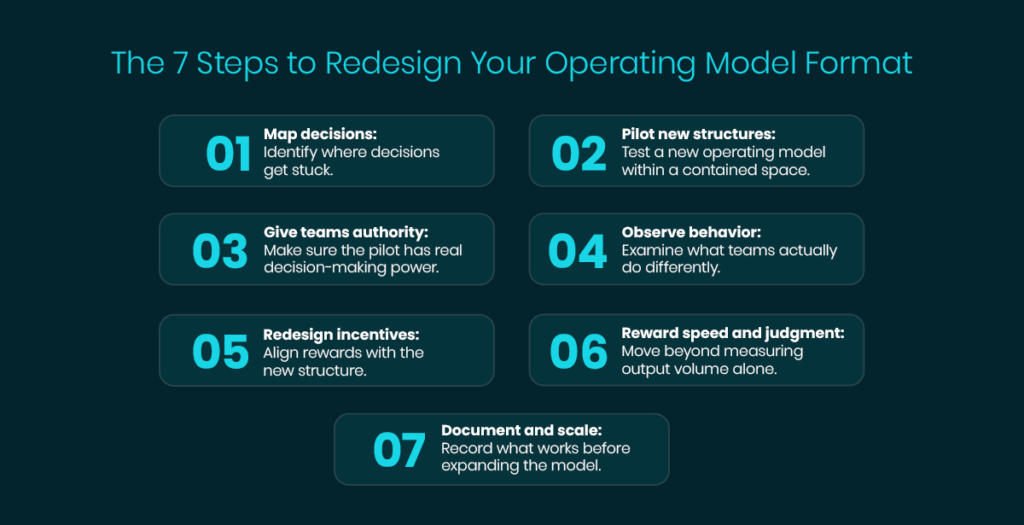
Start by mapping where decisions currently get stuck inside your company. Slow approval chains are usually the first thing AI-native competitors will out-execute you on.

Next, pilot new structures inside a contained space before rolling them out everywhere. A well-run innovation lab gives teams room to test new operating models safely.

Give that pilot team real authority, not just a symbolic mandate. A pilot with no actual decision-making power teaches leadership nothing useful about what will work at scale.

Watch what the pilot team actually does differently, not just what they report in a meeting. Behavior under real pressure reveals far more than any self-assessment survey ever will.

Redesign incentives to match the new structure, not the old one. People chase whatever leadership measures and rewards, no matter what leadership says out loud.

Reward speed and judgment instead of pure output volume. A team that ships less but decides faster is usually the one worth scaling company-wide.

Document what works before scaling it everywhere else. Skipping this step usually means repeating the same avoidable mistakes at a much larger, costlier scale.

Companies further along this path often replace old software cycles entirely. Many have already made the shift from SDLC to ADLC, trading two-week sprints for much faster three-day bolts.

AI transformation

Common Questions About the Future of Work and AI

Is AI actually going to eliminate most jobs?

Not in the way most headlines suggest. AI reshapes tasks and structures well before it eliminates entire roles outright. The bigger risk is an unchanged operating model wrapped around a changed job.

What should leaders redesign first?

Start with decision rights and approval chains, not job titles. Slow, layered decision-making is usually the biggest bottleneck once AI speeds up everything else around it. Fix that bottleneck before touching anything else.

How fast does this change need to happen?

Faster than most leaders expect, but not all at once. Pilot new structures in one team first. Expand only once that pod proves the new model actually works well in practice.

Your Operating Model Is the Real Battleground

AI will not send you a memo before it changes your business. It will simply keep compressing decision cycles until your old structure cannot keep up anymore.

The companies that win this future of work AI shift will not be the ones with the flashiest tools. They will be the ones willing to redesign how people actually decide, assign, and own work.

Start that redesign before a competitor forces your hand. A discovery workshop is a practical first step toward seeing your own operating model clearly.

Rethinking Sales and Business Models in the AI Era

AI has changed both how buyers research vendors and how software gets built, and generic products and generic sales tactics are losing ground as a result. Marketing, not sales, now drives most of the pipeline, because buyers arrive already educated by AI before a sales conversation even starts.

Traditional lead channels are weakening, and the main competitive battle for enterprise deals has shifted from fending off AI-built alternatives to surviving vendor consolidation. The companies best positioned to come out ahead are the ones choosing a clear niche, building real moats around it, and pricing based on outcomes rather than hours or headcount.

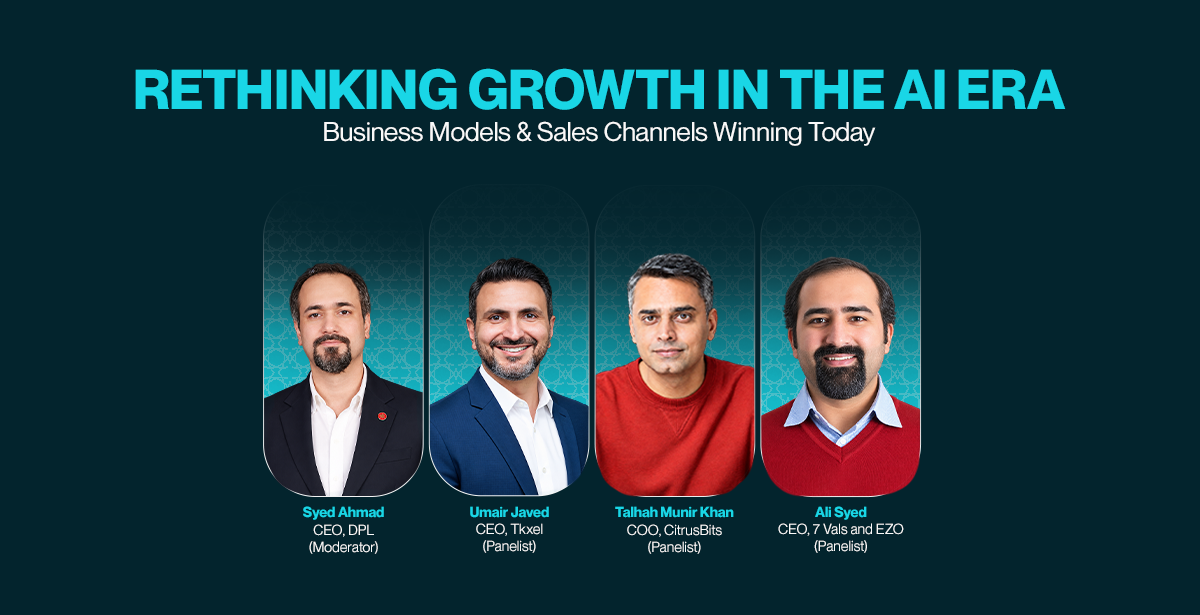
To explore these shifts, Syed Ahmad, CEO of DPL, steered the discussion as moderator.

He was joined by panelists Umair Javed (CEO of Tkxel), Talhah Munir Khan (COO of CitrusBits), and Ali Syed (CEO of 7 Vals and EZO), who shared their real-world perspectives on navigating this evolving landscape.

Winning Sales Channels in the AI Era

  • Review sites, once a dependable source of leads, have lost much of their pull. One platform reported that its own traffic fell by half after AI tools became mainstream, and buyers now research elsewhere.
  • Cold outreach has become noisier rather than less useful. AI lets anyone produce a polished-sounding email or message, so response rates drop even though volume keeps rising.
  • Simply mentioning AI in outreach still earns attention, since curiosity about AI capabilities is currently high enough that even large enterprises respond.
  • The channel itself is rarely the real issue. When outreach is aimed at a well-defined audience and backed by a strong case study, it still converts well, which points to the offer, not the channel, as the usual weak link.

“It’s not really a channel problem, it’s a service line problem.”

What SaaS Models Are Dying vs. What Will Survive

  • Narrow, single-feature SaaS tools are disappearing quickly, because teams can now recreate the same function by prompting an AI model directly, removing the need to pay for a separate product.
  • Broad, deeply embedded platforms such as Zendesk, Jira, HubSpot, and Salesforce remain secure. Customers may use only a fraction of their features, but the overall value still justifies the cost.
  • New buyers increasingly ask whether they could just build the tool themselves, which slows new customer acquisition, even as existing customers stay loyal and keep expanding their usage.
  • The main competitive battle has shifted from fighting off AI-built alternatives to vendor consolidation, as customers actively look to cut the number of vendors, tools, and costs they manage.

The Role of Marketing vs. Sales Now

  • Marketing and sales now play distinct, complementary roles: marketing studies the customer and builds recognition and urgency, while sales steps in to close the deal once that interest exists.
  • Because buyers now arrive already educated through AI-driven research, sales teams spend far less time explaining the product and far more time clearing the practical obstacles to signing.
  • Since AI tools recommend vendors based on visible brand presence and reputation, companies are directing most of their go-to-market budget into marketing rather than sales hiring.
  • In companies below roughly $40 to 50 million in revenue, the CEO is typically still the person driving marketing in practice, even if the title belongs to someone else.

Team Structure and Resourcing in the AI Age

  • Large, seven-person scrum teams are being replaced by small pods, typically one product owner, one developer, and one product manager, who together can cover the same scope of work.
  • These smaller, AI-assisted teams are outperforming larger ones on output: one three-person team completed a project originally scoped for eight to ten people, and did it faster.
  • The most valuable hires now are forward-deployed engineers, who work directly inside the customer’s business to learn their domain, because AI is replacing generic coding work, not the understanding of a customer’s problem.
  • Demand for generic engineering skills is falling while demand for AI-capable, domain-aware talent is rising, though most professionals are expected to delay upskilling until they are forced to by necessity.

Pricing and Business Model Shifts

  • The recommended direction is to move away from pricing based on headcount or hours and toward pricing based on the outcomes actually delivered to the client.
  • Clients are likely to ask for renegotiated terms once they realize AI has lowered the underlying cost of delivery, so it is better for companies to propose the new pricing model themselves, before being asked.
  • Cutting labor costs through AI does not eliminate cost, it shifts it. Cloud and token spend is a new line item that can grow larger than the labor cost it replaced if it isn’t planned for.
  • Lasting differentiation increasingly comes from compliance work and system integrations, since these are harder to copy than the underlying software itself.

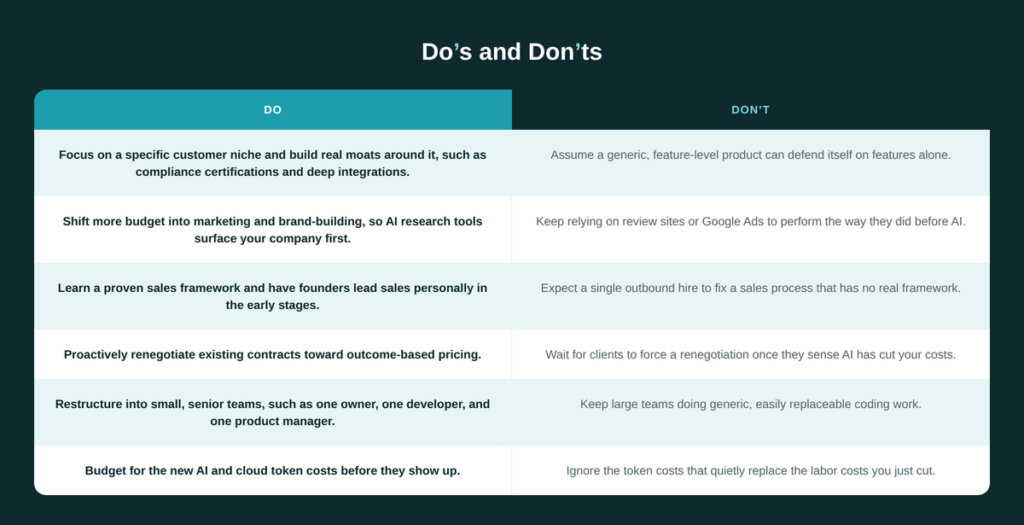
Do’s and Don’ts

Key Takeaways

  • What many companies counted as sales success was, on closer look, really the result of strong marketing creating demand that sales simply closed.
  • Review sites, long treated as a reliable lead source, have lost much of their traffic and influence since AI tools became widely used for research.
  • Coding skill alone is losing value as AI absorbs routine engineering work, while understanding a customer’s specific domain is becoming the harder-to-replace skill.
  • Holding onto a team you can no longer properly resource or pay, out of loyalty, does not fix the underlying business problem and usually delays a harder decision.
  • Clients tend to ask for lower prices once they sense AI has cut a vendor’s delivery costs, so companies that renegotiate on their own terms first are in a stronger position than those who wait.

Watch the complete session here.

Closing Thought

Over the next six months, companies need to stop competing on generic products and generic sales pitches, since both are being commoditized quickly. The more durable path is to choose a specific niche, build real moats around it such as compliance and integration depth, and redirect budget from outbound sales into marketing so that AI-driven buyer research surfaces the company first.

Teams should be restructured into smaller, senior groups built around people who understand the customer’s domain, and pricing conversations, including with existing clients, should move proactively toward outcomes rather than waiting for clients to demand it.

At the same time, any labor cost saved through AI needs to be re-budgeted against the new and fast-growing cost of cloud and token usage. Companies that make these changes now will set the pace in their markets, while those that wait risk being renegotiated, undercut, or overtaken by competitors who moved first.

FAST-NUCES Faculty Get Hands-On AI-DLC Training as AI Reshapes Software Development

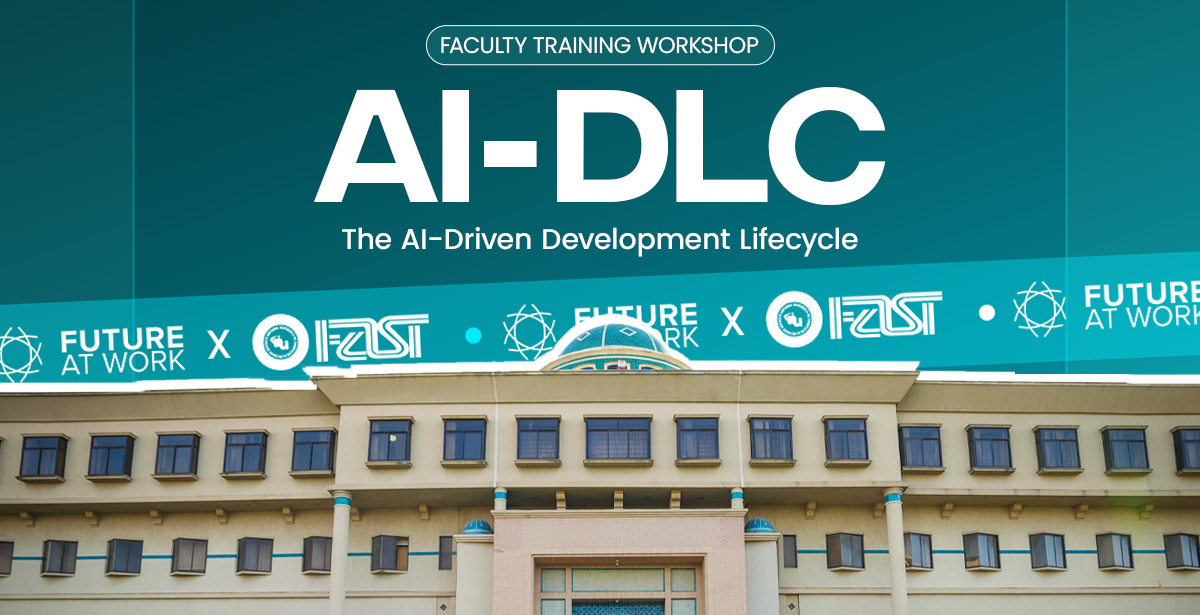
Future At Work conducted a hands-on, intensive training session for the Computer Science faculty at FAST-NUCES, Islamabad Campus, on Friday, August 21st, focused on AI-DLC (AI Development Life Cycle).

The session was led by mentors Nauman Faridi and Hazar Hayat, who took faculty through practical, real-world AI development workflows rather than limiting the session to theory. Dr. Arshad Islam, Head of the Computer Science Department, facilitated and hosted the session on behalf of FAST-NUCES.

The goal was straightforward: bring current, real-world AI practices directly into the classroom without waiting years for university curricula to catch up. Course updates can take one to three years, while AI tools and workflows evolve almost every week. The hands-on session helped bridge that gap in real time.

Faculty members remained highly engaged throughout the session, actively working through the material and showing strong eagerness to learn and apply the new tools themselves.

The initiative also reflects Dr. Arshad Islam’s ongoing push to keep the department aligned with industry trends. By training faculty directly, the impact extends far beyond one classroom, with every student these faculty members teach in the coming years standing to benefit from more current, hands-on knowledge.

FAST-NUCES, established in 2000 as Pakistan’s first multi-campus university, has long been recognized by the Higher Education Commission as the country’s top-ranked institution for computer science and information technology, making initiatives like this particularly meaningful for Pakistan’s wider technology education landscape.

Future At Work thanks FAST-NUCES and Dr. Arshad Islam for supporting this collaboration, alongside our partners Knowledge Future and DPL, and looks forward to continuing efforts that keep Pakistan’s computer science education aligned with real-world industry practice.

Transformational Leadership in 2026: Leading Through the AI Revolution

AI can write code, draft a contract, or analyze a spreadsheet in seconds. It cannot decide what your company stands for.

It cannot make a scared team feel safe enough to take a risk. That’s still a human job. It’s why transformational leadership matters more in 2026 than it did five years ago.

Most leadership advice from the last decade assumes a stable org chart and a predictable market. Neither exists anymore. Founders now need a leadership mindset built for constant change, not quarterly planning cycles.

This piece breaks down what that kind of leadership actually requires today. It builds on lessons from our masterclass on EQ-driven leadership, and it covers servant leadership habits, real leadership development, and the leadership transformation that survives contact with AI.

What Is Transformational Leadership?

Transformational leadership is a style where a leader inspires people to exceed their own expectations, not just hit a target. The leader models the change first, then invites the team to follow.

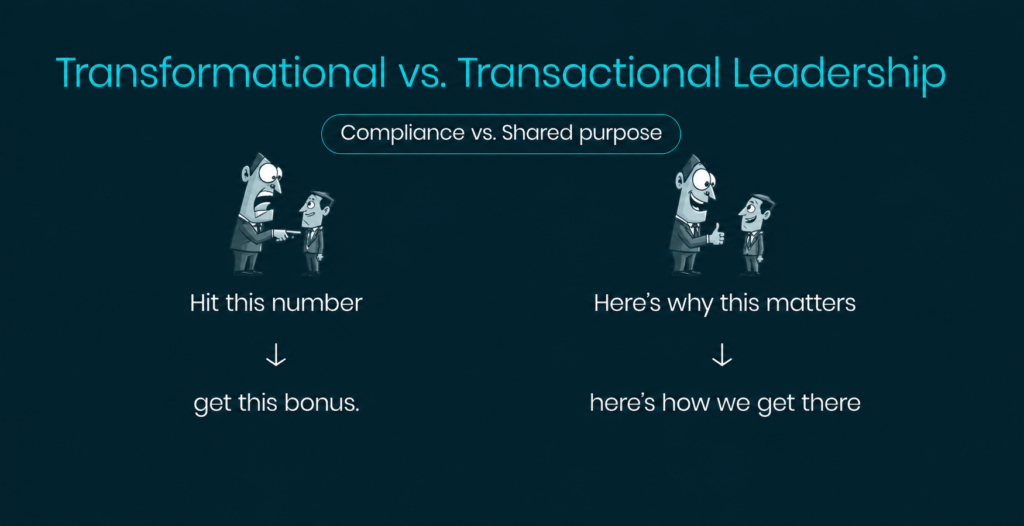
This differs from transactional leadership, which trades rewards for compliance. A transactional manager says, “Hit this number, get this bonus.” A transformational leader says something different: “Here’s why this matters, and here’s how we get there.” Both styles have a place, but only one builds loyalty that survives a hard quarter.

The AI revolution makes this style non-negotiable. When machines handle routine execution, the human job shifts to vision, judgment, and trust. That’s where this leadership style earns its keep.

Founders who lead this way build teams that adapt fast. People trust the direction even when the plan changes mid-quarter, and that trust is what keeps a team moving instead of freezing.

Transformational Leadership in 2026

Why Leadership Transformation Can’t Wait for the Next Reorg

Leadership transformation used to happen on a schedule: a new title, a training program, maybe an offsite. That timeline doesn’t work anymore.

AI changes job descriptions every quarter, not every five years. A leader who waits for the “right moment” to change how they lead will run out of moment.

Most leadership development programs still fail because they train for a version of the job that already changed. Leadership transformation has to happen alongside the work, not in a separate room once a year.

Small, constant adjustments beat one big overhaul. A leader who reviews their own habits monthly stays closer to how the team actually works.

Servant Leadership Is the Foundation AI-Native Teams Need

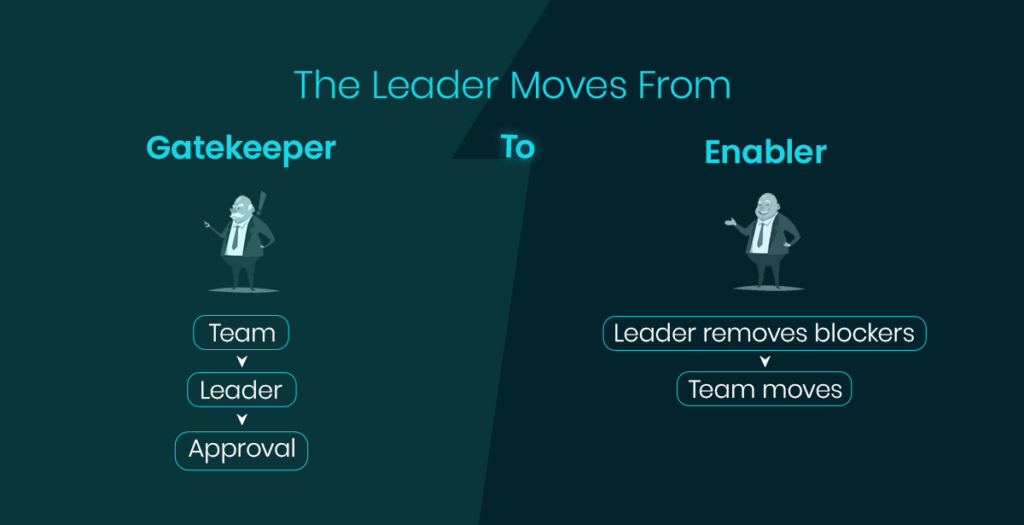
Servant leadership flips the usual hierarchy. The leader’s job is to remove obstacles for the team, not sit above it and issue orders.

This matters more now because AI-native teams move fast. A pod can’t wait three days for a director to approve a decision. The leader’s role becomes clearing the path, not gating it.

Coaching, not policy enforcement, is what servant leadership looks like day to day. A servant leader asks better questions instead of writing more rules.

That shift feels uncomfortable for leaders trained to command. It pays off fast once a team starts solving problems without waiting for permission.

Transformational Leadership in 2026

Why Executive Leadership Coaching Matters More in the AI Era

Executive leadership coaching used to be a perk reserved for the C-suite. That’s changing, and the data explains why.

According to the International Coaching Federation, 87% of surveyed leaders say executive coaching delivers a strong return on investment. Companies that pair coaching with structured leadership development see the gains compound, not just add up.

Coaching works because it targets behavior, not just knowledge. A workshop teaches a leader what to do. Coaching helps them do it under pressure, which is where most leadership habits break down.

Founders often resist coaching because they think it’s a sign of weakness. In practice, it’s closer to the way athletes use a coach: to sharpen skill that’s already there.

Most executive leadership coaching engagements run for three to six months, with regular check-ins tied to real decisions the leader is facing that week. That structure is what makes the behavior change stick, instead of fading out once the workshop ends.

Building a Leadership Mindset Through Real Leadership Development

A leadership mindset isn’t a personality trait. It’s a set of habits: curiosity, comfort with ambiguity, and the willingness to say “I don’t know yet.”

Gallup’s research found something worth sitting with. Manager quality explains 70% of the variance in team engagement. That single number should reset how every company budgets for leadership development.

Leadership development that builds this mindset looks less like a lecture series and more like practice. Real decisions, real feedback, and real stakes teach faster than theory.

Our guide on building a culture of innovation covers how to create the conditions for that kind of practice.

Frequently Asked Questions

What’s the difference between transformational and transactional leadership?

Transformational leadership inspires people toward a shared vision. Transactional leadership trades rewards for specific results. Most AI-era teams need both, but this style carries more weight now.

Can servant leadership work in a fast-moving, AI-native company?

Yes. Servant leadership speeds things up because the leader removes blockers instead of adding approval steps. Fast teams need leaders who clear the path, not guard it.

Does executive leadership coaching really change behavior?

It does, when paired with accountability. Coaching targets specific behaviors under real pressure, and that sticks better than a one-time workshop.

How do you build a leadership mindset if you weren’t born with one?

You practice it. Leadership mindset develops through real decisions, tight feedback loops, and coaching, not personality tests.

Start Your Leadership Transformation

Transformational leadership isn’t a soft skill anymore. It’s the operating skill that decides whether your company adapts to AI or loses ground to a competitor who did.

Leadership transformation, servant leadership, and real leadership development aren’t three separate initiatives. They’re one shift. It’s about leading people the way AI-native work actually demands.

Talk to our leadership consulting team and find out where your leadership style needs to change first. The sooner you start, the less catching up you’ll do later.

Design Thinking in the AI Era: What Still Works and What Needs to Change

AI can generate fifty interface concepts in a minute. It still can’t tell you which one your customer actually needs. That gap is exactly what design thinking was built to close, and it matters more now than ever.

This approach gives teams a structured way to solve real problems for real people. Speed means nothing if you build the wrong thing faster. AI is reshaping ideation, prototyping, and delivery. Leaders need to know which parts of the process still hold and which parts need a rework.

Future At Work’s Innovation Lab exists for exactly this reason. It helps teams experiment with AI-native ways of working without losing the human judgment that makes innovation stick.

Why Design Thinking Still Matters in the AI Era

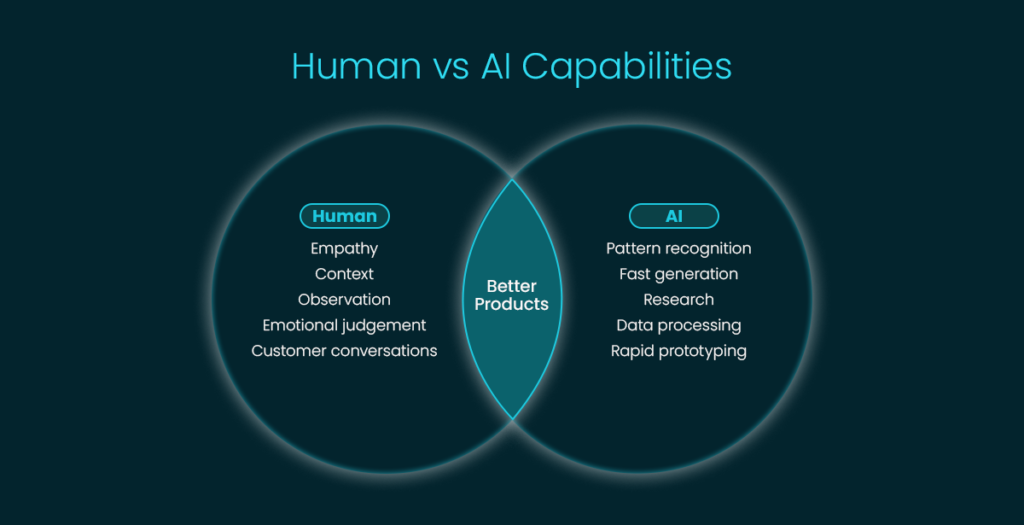
Human centered design starts with empathy, not technology. It asks one question before any other: what does this person actually need? AI can process data at a scale no human matches. It still can’t feel frustration, notice hesitation, or read the story behind a customer complaint.

That’s why human centered design remains the foundation of good product work. Teams that skip the empathy stage and jump straight to AI-generated solutions often build fast and wrong. They ship features nobody asked for, backed by a slick prototype and zero real demand.

This discipline forces a pause before that happens. It insists that teams define the problem clearly before reaching for any tool, AI or otherwise. That habit hasn’t aged. If anything, it’s the one part of the process AI can’t shortcut.

design thinking

What AI Actually Changes About the Process

AI doesn’t replace design thinking. It compresses it.

Ideation and prototyping, once the slowest stages, now move at a different speed. A designer can ask an AI tool to generate dozens of interface directions in minutes. That used to take days of sketching and revision.

Figma’s 2026 design statistics report found that 85% of designers and developers say AI will be essential to their future success. Another 78% say AI tools speed up their workflows significantly.

Only 58% say it improves the quality of their work. That gap between speed and quality is the real story.

Faster ideation only helps if a human still filters the output through empathy and judgment. This is where an innovation mindset matters more than any single tool.

Teams need people who can look at fifty AI-generated options. They need to know, based on real user insight, which one actually solves the problem.

The Innovation Culture Gap Nobody Talks About

Most companies don’t fail at innovation because they lack a process template. They fail because their culture punishes the experimentation real problem-solving requires.

Digital transformation efforts fall short of their stated goals far more often than leaders expect. That’s according to McKinsey’s research on transformation. The tools were rarely the main problem. Risk-averse, hierarchical cultures block the honest customer feedback and rapid iteration that good product work depends on.

Building a culture of innovation means giving teams permission to test, fail small, and adjust fast. Without that permission, even the best innovation workshop produces a nice deck and no real change. Leadership has to model the behavior it wants, not just fund the workshop and walk away.

We covered this in more depth in How to Create a Culture of Innovation in the Workplace. It walks through the specific structural shifts that make real experimentation possible.

Innovation Management Turns Good Ideas Into Shipped Products

A one-off design sprint doesn’t fix a culture problem. The process needs a system around it, one that carries an idea to a shipped product.

This is where innovation management earns its keep. It’s the connective tissue between a good idea and a validated one. Our AI Lab framework uses this same approach as its first stage. It pairs ideation with a data readiness audit, before a single line of code gets written.

Teams also need the right structure to execute what that first stage uncovers. A decentralized, pod-based team structure lets small groups of humans and AI agents act on an idea immediately. There’s no need to route it through five layers of approval and a quarterly planning cycle.

How to Adapt the Process for AI-Native Teams

Three shifts matter most for teams putting this into practice today.

  1. Treat AI as a brainstorming partner, not a decision-maker. Use it to widen the pool of options. Keep the final call with a human who understands the user.
  2. Compress your cycles. Test ideas in days, not months. Faster AI-assisted prototyping only pays off if your validation loop moves just as fast.
  3. Measure adoption, not just output volume. A hundred AI-generated concepts mean nothing if your team can’t act on the one idea that actually works.

How does this work when AI agents sit on the team? It works the same way it always has. Someone still has to define the problem, talk to the real user, and decide what “good” looks like. AI expands the toolkit. It does not replace the thinking behind it.

The Bottom Line

Design thinking isn’t outdated. It’s being tested by a tool that moves faster than the process was ever designed for.

The teams that win won’t be the ones with the flashiest AI. They’ll be the ones who pair AI speed with real human insight. Their culture lets people experiment without fear of getting it wrong.

If you want to find out where the gaps sit in your own organization, start with a Discovery Workshop. It’s the fastest way to see whether your process, and your culture, are ready for what AI demands next.

Employee Engagement Strategies That Actually Work When AI Is Reshaping Every Role

Employee engagement strategies built for 2015 don’t work in 2026. AI is rewriting job descriptions faster than most HR playbooks can keep up. Gallup’s 2025 State of the Global Workplace report found that global employee engagement dropped to 20%, its lowest point since 2020.

AI is not just automating tasks. It is changing what a “role” even means. Founders who lean on old tactics, like free snacks and annual reviews, miss the real problem.

People disengage when they lose ownership over their work. AI makes that risk worse unless leaders redesign how work actually gets done. Here are the employee engagement strategies that hold up when AI touches every role.

employee engagement

Why Old Employee Engagement Playbooks Are Failing

Most corporate cultures still run on assembly line thinking. Break work into small, standardized tasks. Make people replaceable. Add more process when things go wrong. This model worked for factories. It fails for knowledge work, and it fails even harder once AI enters the picture.

Job security fears are rising fast. In Gallup’s research, 18% of U.S. employees expect their job to disappear within five years because of automation or AI. That number climbs to 23% inside companies that have already rolled out AI tools. Fear does not drive engagement. It drives quiet quitting.

The fix is not a better perks package. It is a different operating model, one built on trust instead of control.

Culture of Accountability Beats Culture of Compliance

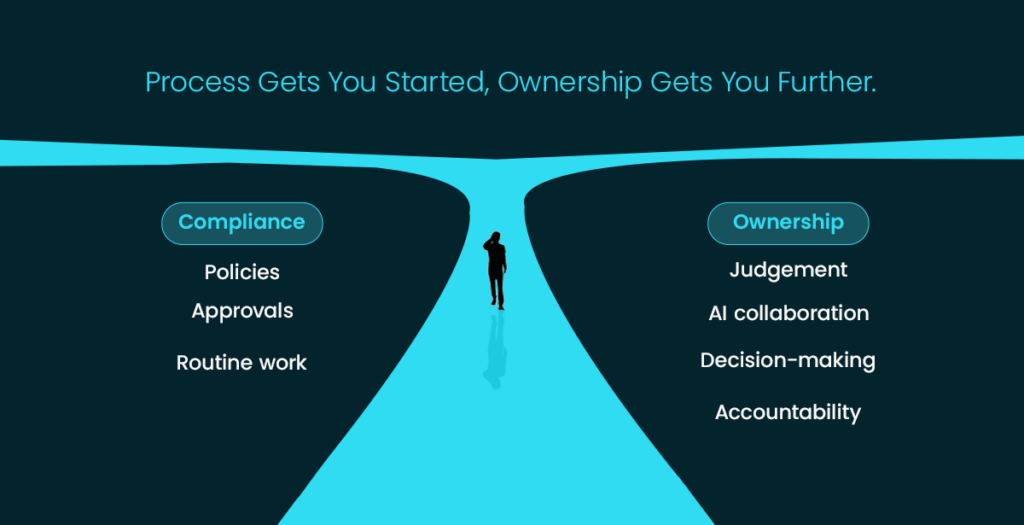
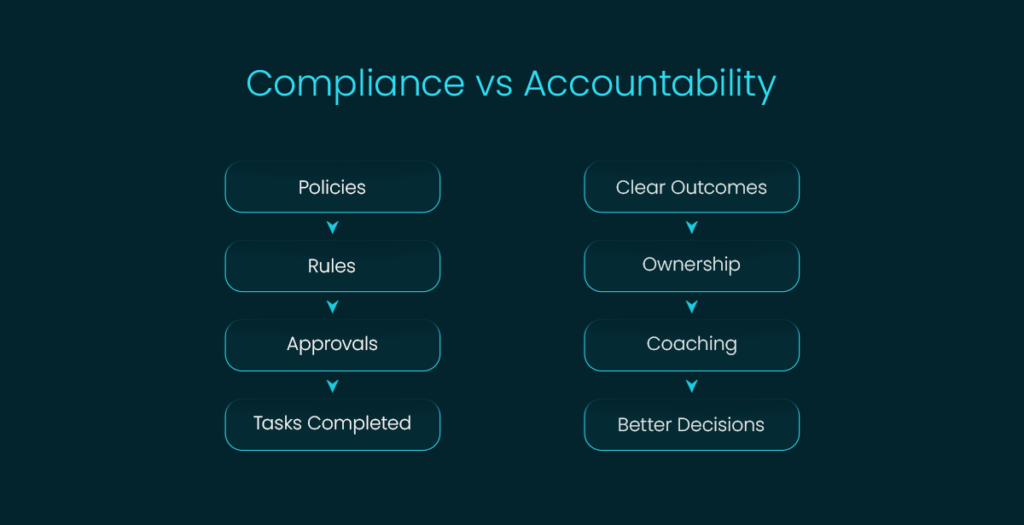
A culture of accountability looks nothing like a culture of compliance. Compliance asks people to follow rules. Accountability asks people to own outcomes.

Coaching, not policy enforcement, is what makes accountability stick. Rigid rulebooks backfire with modern teams, a pattern we unpack in why coaching will replace policy enforcement. Rules tell people what they cannot do. Coaching tells people what great work looks like, then trusts them to get there.

This matters more, not less, as AI enters daily workflows. When an AI agent drafts the first version of a report, a human still owns the judgment call.

Accountability has to sit with a person, every time. Teams that build this expectation early adapt faster than teams that wait for a crisis to force the issue.

employee engagement

Team Culture Building Starts With Ownership

Real team culture building starts with ownership, not with another all-hands meeting. Give people a clear problem to solve and the authority to solve it. Ownership culture means employees make real decisions, not just suggestions that go up a chain of approval.

Startup DNA organizations already work this way. They run lean, flat, and fast. Corporate DNA organizations, by contrast, bury decisions in layers of sign-off. Most companies in Pakistan and the Gulf still lean corporate, which is exactly why disengagement runs so high.

Small, cross-functional pods are one practical way to build ownership at scale. Pods of humans and AI agents replace rigid, hierarchical teams, as we cover in decentralized team structures. Each pod owns a problem end to end. Nobody waits for permission to move.

What a High Performance Culture Looks Like With AI on the Team

A high performance culture treats AI as a teammate, not a threat. The World Economic Forum’s Future of Jobs Report projects 92 million jobs displaced by 2030, but 170 million new roles created, a net gain of 78 million. Roles are shifting, not vanishing.

High-performance teams pair humans with AI agents inside short execution cycles, sometimes called bolts, instead of two-week sprints. People still set direction, judge quality, and make the calls that matter. AI handles the repetitive first draft.

Does AI reduce the need for employee engagement? No. It raises the stakes. When routine tasks get automated, the human work that remains is judgment, creativity, and relationships. Disengaged people do that kind of work badly. Engaged people do it exceptionally well.

Many so-called agile structures are agile in name only. Legacy hierarchies quietly undo real agility, even after a company adopts the language of Scrum, a pattern explored in organizational structures that aren’t actually agile.

How to Start Building Ownership Culture This Quarter

Founders do not need a five-year plan to start. Three moves work well together.

First, define roles and decision rights clearly. Vague ownership creates silent disengagement. See the webinar on workplace roles and responsibilities for exactly how to do this as a company scales.

Second, replace one policy with one coaching conversation this month. Pick a rule that frustrates your best people and swap it for a direct conversation about expectations.

Third, run a short pilot. Give one team a real problem, real authority, and an AI tool, then measure what happens over one bolt cycle. A structured discovery workshop is a fast way to identify where to start.

Trust Is the New Engagement Strategy

Employee engagement strategies that ignore AI are already outdated. The organizations that will thrive are the ones that swap control for accountability, compliance for coaching, and hierarchy for ownership. Engagement was never about perks. It was always about trust.

Start small, start now, and build the kind of culture people don’t want to leave.