





Transformational Leadership in 2026: Leading Through the AI Revolution

AI can write code, draft a contract, or analyze a spreadsheet in seconds. It cannot decide what your company stands for.

It cannot make a scared team feel safe enough to take a risk. That’s still a human job. It’s why transformational leadership matters more in 2026 than it did five years ago.

Most leadership advice from the last decade assumes a stable org chart and a predictable market. Neither exists anymore. Founders now need a leadership mindset built for constant change, not quarterly planning cycles.

This piece breaks down what that kind of leadership actually requires today. It builds on lessons from our masterclass on EQ-driven leadership, and it covers servant leadership habits, real leadership development, and the leadership transformation that survives contact with AI.

What Is Transformational Leadership?

Transformational leadership is a style where a leader inspires people to exceed their own expectations, not just hit a target. The leader models the change first, then invites the team to follow.

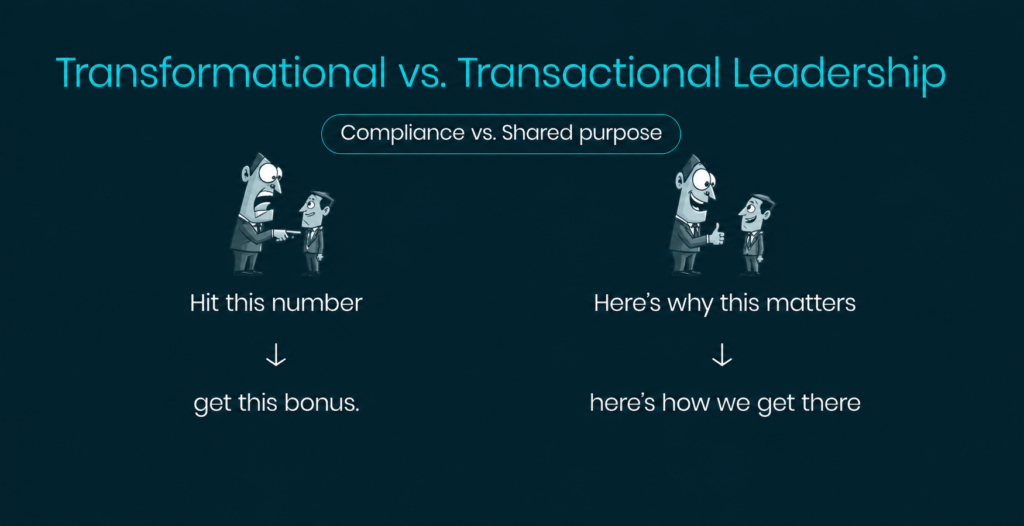
This differs from transactional leadership, which trades rewards for compliance. A transactional manager says, “Hit this number, get this bonus.” A transformational leader says something different: “Here’s why this matters, and here’s how we get there.” Both styles have a place, but only one builds loyalty that survives a hard quarter.

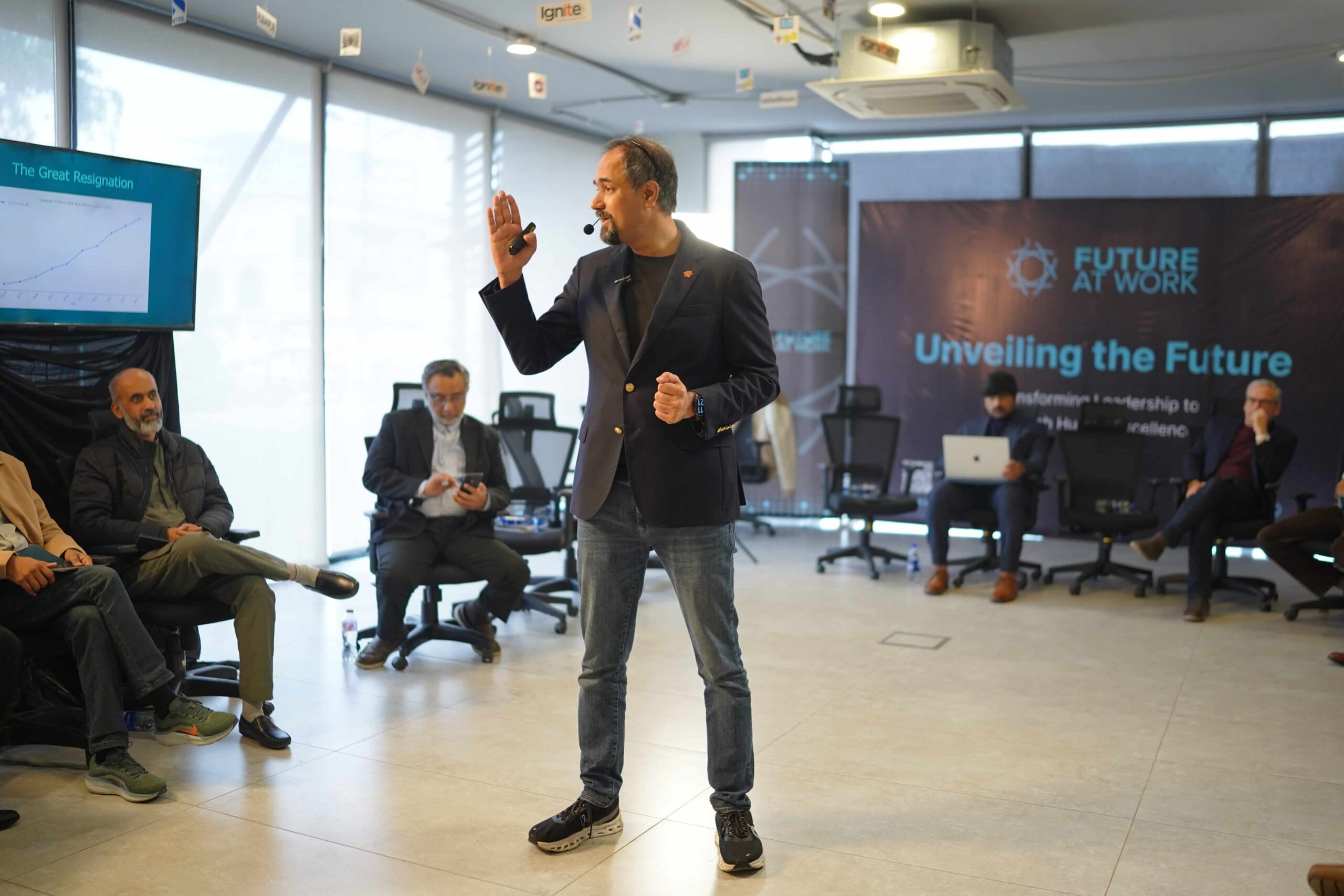
The AI revolution makes this style non-negotiable. When machines handle routine execution, the human job shifts to vision, judgment, and trust. That’s where this leadership style earns its keep.

Founders who lead this way build teams that adapt fast. People trust the direction even when the plan changes mid-quarter, and that trust is what keeps a team moving instead of freezing.
Transformational Leadership in 2026

Why Leadership Transformation Can’t Wait for the Next Reorg

Leadership transformation used to happen on a schedule: a new title, a training program, maybe an offsite. That timeline doesn’t work anymore.

AI changes job descriptions every quarter, not every five years. A leader who waits for the “right moment” to change how they lead will run out of moment.

Most leadership development programs still fail because they train for a version of the job that already changed. Leadership transformation has to happen alongside the work, not in a separate room once a year.

Small, constant adjustments beat one big overhaul. A leader who reviews their own habits monthly stays closer to how the team actually works.

Servant Leadership Is the Foundation AI-Native Teams Need

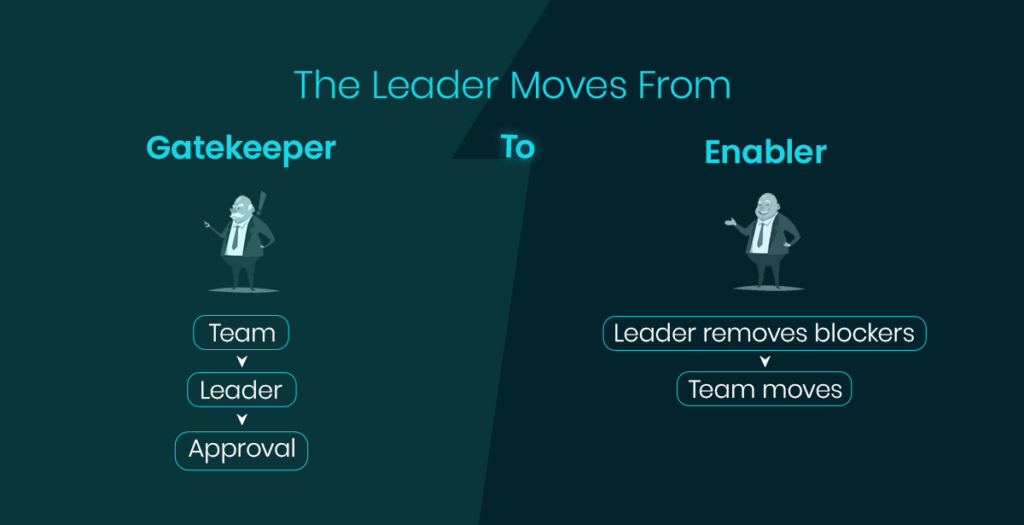
Servant leadership flips the usual hierarchy. The leader’s job is to remove obstacles for the team, not sit above it and issue orders.

This matters more now because AI-native teams move fast. A pod can’t wait three days for a director to approve a decision. The leader’s role becomes clearing the path, not gating it.

Coaching, not policy enforcement, is what servant leadership looks like day to day. A servant leader asks better questions instead of writing more rules.

That shift feels uncomfortable for leaders trained to command. It pays off fast once a team starts solving problems without waiting for permission.
Transformational Leadership in 2026

Why Executive Leadership Coaching Matters More in the AI Era

Executive leadership coaching used to be a perk reserved for the C-suite. That’s changing, and the data explains why.

According to the International Coaching Federation, 87% of surveyed leaders say executive coaching delivers a strong return on investment. Companies that pair coaching with structured leadership development see the gains compound, not just add up.

Coaching works because it targets behavior, not just knowledge. A workshop teaches a leader what to do. Coaching helps them do it under pressure, which is where most leadership habits break down.

Founders often resist coaching because they think it’s a sign of weakness. In practice, it’s closer to the way athletes use a coach: to sharpen skill that’s already there.

Most executive leadership coaching engagements run for three to six months, with regular check-ins tied to real decisions the leader is facing that week. That structure is what makes the behavior change stick, instead of fading out once the workshop ends.

Building a Leadership Mindset Through Real Leadership Development

A leadership mindset isn’t a personality trait. It’s a set of habits: curiosity, comfort with ambiguity, and the willingness to say “I don’t know yet.”

Gallup’s research found something worth sitting with. Manager quality explains 70% of the variance in team engagement. That single number should reset how every company budgets for leadership development.

Leadership development that builds this mindset looks less like a lecture series and more like practice. Real decisions, real feedback, and real stakes teach faster than theory.

Our guide on building a culture of innovation covers how to create the conditions for that kind of practice.

Frequently Asked Questions

What’s the difference between transformational and transactional leadership?

Transformational leadership inspires people toward a shared vision. Transactional leadership trades rewards for specific results. Most AI-era teams need both, but this style carries more weight now.

Can servant leadership work in a fast-moving, AI-native company?

Yes. Servant leadership speeds things up because the leader removes blockers instead of adding approval steps. Fast teams need leaders who clear the path, not guard it.

Does executive leadership coaching really change behavior?

It does, when paired with accountability. Coaching targets specific behaviors under real pressure, and that sticks better than a one-time workshop.

How do you build a leadership mindset if you weren’t born with one?

You practice it. Leadership mindset develops through real decisions, tight feedback loops, and coaching, not personality tests.

Start Your Leadership Transformation

Transformational leadership isn’t a soft skill anymore. It’s the operating skill that decides whether your company adapts to AI or loses ground to a competitor who did.

Leadership transformation, servant leadership, and real leadership development aren’t three separate initiatives. They’re one shift. It’s about leading people the way AI-native work actually demands.

Talk to our leadership consulting team and find out where your leadership style needs to change first. The sooner you start, the less catching up you’ll do later.

Executive Leadership Development in 2026: What the AI Shift Demands

Executive Leadership Development in 2026: What the AI Shift Demand

Something is happening at the top of most organizations right now. Executives feel the weight of AI transformation bearing down on every decision they make. Many respond by buying tools, hiring consultants, and announcing AI strategies. Outcomes rarely match the ambition.

Technology is not the core problem. Most leaders already have access to AI tools. That gap is a leadership gap — and no amount of new software closes it.

This is why executive leadership development matters more in 2026 than it ever has before.

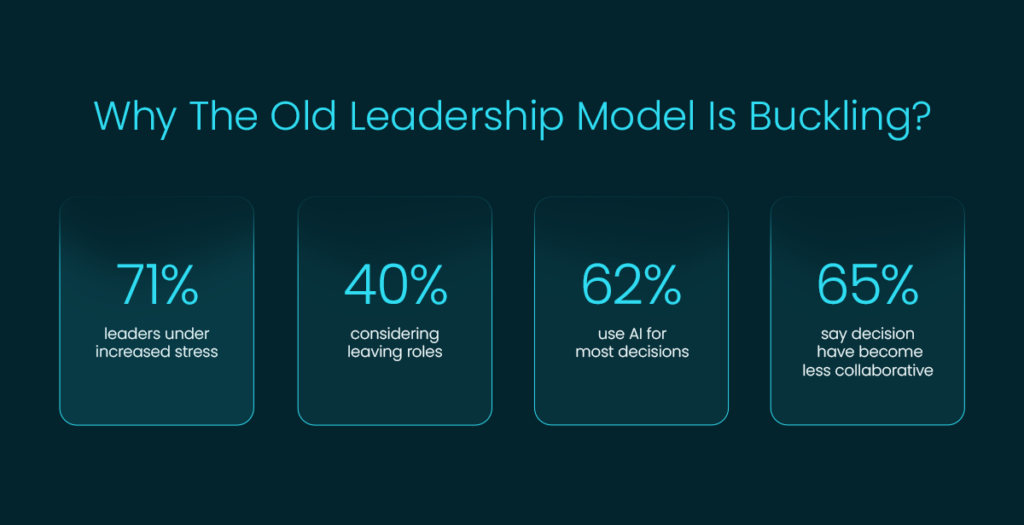
The Old Leadership Model Is Buckling

DDI’s Global Leadership Forecast found that 71% of leaders report being under increased stress, with 40% actively considering leaving their roles. Burnout is no longer an individual problem. It signals that the old leadership model is failing under new conditions.

Traditional leadership development programs built executives to manage processes, control information flows, and optimize existing operations. Those capabilities still matter. But they no longer cover the full job.

AI is reshaping what executives actually need to do. According to a 2026 survey, 62% of leaders now use AI to make the majority of their decisions. Meanwhile, 65% say decision-making has become less collaborative since they adopted AI. Think about what that means: leaders are offloading judgment to machines while simultaneously becoming more isolated.

Not transformation. Abdication.

The Real Gap: Judgment, Not Technical Fluency

Most organizations treat the AI skills gap as a training problem: get leaders up to speed on the tools and the gap closes. McKinsey’s 2025 State of AI report tells a different story. Only 1% of companies have achieved what researchers define as AI maturity, while 92% plan to increase AI investments.

Investment is outpacing maturity — and leadership is why.

WEF projects that 39% of core job skills will change by 2030. Leadership-related abilities (judgment, accountability, adaptability) are rising fastest alongside AI literacy. Technical fluency matters. But judgment is the variable that actually determines outcomes.

Executives who pursue genuine leadership transformation do not just learn how to use AI. They learn how to think, decide, and lead in environments where AI sits inside every meeting, every decision, and every team dynamic.

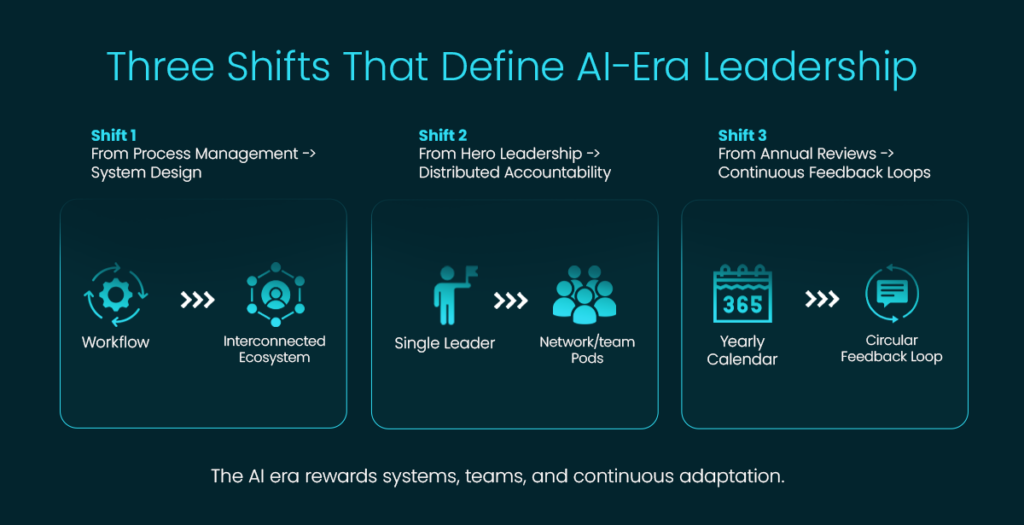
Three Shifts That Define AI-Era Leadership

Effective executive leadership development in 2026 builds three specific shifts. Not competencies that sit in a framework document. These are real behavioral changes that show up in how executives run their organizations day to day.

From managing processes to designing systems. Spending time on process oversight misuses an executive’s most valuable resource. AI handles execution faster than any human team. System design becomes the new role: structuring how humans and AI agents work together, where authority sits, and how teams measure outcomes.

From individual decisions to distributed leadership accountability. AI-era organizations reward teams, not heroes. Executives who push decisions down to pods and small cross-functional teams, and build the culture to support it, move faster and develop stronger organizational capacity. Leadership accountability becomes a team practice, not a solo performance.

From annual reviews to continuous feedback loops. Short execution cycles generate data faster than quarterly reviews can process. Executives who shift to continuous feedback, reading signals weekly and adjusting direction monthly, give their organizations a genuine competitive edge.

Leadership consulting is often the fastest path to making these shifts in practice. Embedded, ongoing coaching changes behavior in real working contexts. Classroom sessions don’t.

What a Real Leadership Development Program Looks Like in 2026

Many organizations still treat executive development as an event. A two-day offsite. A speaker. A workbook. Everyone returns to the same behaviors and the same incentive structures.

It does not work. It never did. But AI makes the gap between what organizations need and what those programs deliver impossible to ignore.

Modern executive leadership coaching embeds inside the work, not alongside it. Coaches work with leaders on live challenges: a market entry, a restructuring, an AI lab launch. Development happens through real decisions, not hypothetical case studies.

A strong leadership development program also builds culture alongside individual capability. An executive who develops genuine leadership accountability while their team still runs on fear and compliance has only solved half the problem.

Starting with a discovery workshop gives leadership teams a structured diagnosis: where they actually stand, where the real gaps are, and what a focused plan needs to address. Not a generic framework. A specific one.

For a broader view on building the organizational foundation that makes this stick, our piece on building a future of work strategy that survives the AI shift covers the full picture.

The Bottom Line

Executive leadership development in 2026 is not about staying current on AI trends. Building judgment, accountability structures, and behavioral habits is the real work.

Technology is here. Tools are accessible. What separates organizations that succeed from those that stagnate is whether the people at the top have done the hard work of developing themselves for the era they actually operate in.

None of it happens at an offsite. It happens in the trenches, with the right coaching, the right structure, and an honest commitment to change.

Why Most Leadership Development Programs Fail in an AI-Driven World

Every year, organizations globally spend over $366 billion on leadership development programs. Only 10% of that training delivers measurable results.

If you’ve sat through a two-day offsite and returned to find your behavior unchanged, your team unchanged, your culture unchanged – you already know this.

The failure isn’t a budget problem. Research shows 86% of companies rate leadership development as a top priority, yet only 13% feel they do it well. The gap between investment and impact is enormous. And AI is making it impossible to ignore any longer.

Here’s why most programs fail, and what executive leadership development actually looks like when it works.

The Training Is Disconnected from Real Work

Most leadership development programs share the same design flaw: they teach leadership in the abstract. A workshop. A framework. A set of competencies printed on a laminated card.

McKinsey identified this as one of the four root causes of program failure. Context is everything. A leader who performs well in a stable corporate environment may be completely underprepared for a team navigating AI-driven role changes. Moreover, a founder who thrives in startup chaos may lack the emotional regulation to lead a scaling team through a difficult transition.

Leadership cannot be developed in a vacuum. It has to happen inside the actual pressures, tensions, and decisions of real work. That means working through a real hire who isn’t performing, a real strategic pivot that’s creating fear, a real conflict between two senior leaders. Not a simulated version of these things.

Mindsets Are Never Addressed

The second failure is more uncomfortable: most programs change the language without changing the belief.

You can run a delegation workshop. You can teach a manager the vocabulary of empowerment. But if that manager genuinely believes control is safety, if they’ve built their career on being the smartest person in the room, the workshop will not change that. They’ll use the new words and keep the old behavior.

The behaviors you want from a leader are always downstream of what they believe about themselves, their team, and what good leadership looks like. Therefore, without confronting those beliefs, you’re decorating the surface.

This is the core of what makes leadership coaching for founders different from a standard program. Founders have usually built something real. That’s their identity. Asking them to let go, to trust others, to distribute decision-making is not a skills gap. That’s a worldview challenge. And it takes a different kind of engagement to address it.

AI Is Exposing What Was Already Broken

Here’s what the AI era has changed: it’s removed the hiding spots.

In a traditional organization, a manager could compensate for weak leadership with process. You couldn’t always tell whether a team was disengaged or thriving because the system kept things moving. Metrics got hit. Meetings happened. Work got done.

AI changes that equation. When agents start handling execution tasks, when junior roles shrink, when teams become small pods of humans and AI working together, leadership quality becomes the primary variable. You can no longer paper over weak management with bureaucratic scaffolding.

McKinsey’s research on leadership in the age of AI puts it plainly: the biggest barrier to scaling AI is not employees. It’s leaders who are not steering fast enough.

The organizations that struggle most with AI transformation are almost always the same ones that failed at leadership development. The culture was already hostile to experimentation. The management layer was already too controlling. AI just surfaces it faster and at a much greater cost.

No Ownership. No Measurement. No Change.

The third and fourth failure modes compound everything else: no one owns the development, and no one measures whether it worked.

Most leadership programs are designed by HR, delivered by an external vendor, and attended by managers who were told to show up. There is no ownership. No consequence. And almost never a rigorous follow-up to ask: did this person’s behavior actually change? Did their team perform differently? Did the culture shift at all?

Leadership accountability has to be built into how development is designed, not as a compliance checkbox, but as a genuine commitment loop. What will you do differently? How will we know? Who holds you to it?

This is where leadership transformation differs from a leadership development program. A program has a start and an end date. Whereas transformation is a sustained engagement, one that builds in measurement, honest feedback, and real accountability structures over time.

What Actually Works

A few things consistently deliver results in the AI era.

First, development embedded in real decisions. The most effective leadership consulting doesn’t run workshops. It coaches leaders through the actual problems they’re facing right now: the team member who isn’t stepping up, the board dynamic creating friction, the strategic decision that keeps getting deferred. Real context, real stakes, real change.

Second, addressing mindsets before behaviors. This requires psychological safety, honest feedback, and a trusted advisory relationship over time. It also means building genuine fluency in how AI is rewriting the nature of work and what that demands from leaders specifically. Not generic AI literacy, but practical capability in leading teams that include both humans and agents.

Third, building real accountability structures so that behavior change is tracked, visible, and held over time. Not a quarterly check-in. Ongoing, embedded, consequential.

If you want to understand where your leadership culture actually stands before investing in another program that produces nothing, start with a structured discovery process to surface what’s actually in the way.

Leadership Transformation Is a Decision, Not a Program

Most leadership development programs fail not because the content is wrong, but because they treat leadership as a skill to be taught rather than a worldview to be challenged.

In an AI-driven world, that gap closes fast, the leaders who will build high-performing, AI-native organizations are not the ones who attended the most workshops. They’re the ones who did the harder work: confronting their assumptions, building real accountability, and learning to lead in conditions that have no precedent.

A leadership development program will not get you there. A genuine commitment to leadership transformation will.