







AI can write code, draft a contract, or analyze a spreadsheet in seconds. It cannot decide what your company stands for.
It cannot make a scared team feel safe enough to take a risk. That’s still a human job. It’s why transformational leadership matters more in 2026 than it did five years ago.
Most leadership advice from the last decade assumes a stable org chart and a predictable market. Neither exists anymore. Founders now need a leadership mindset built for constant change, not quarterly planning cycles.
This piece breaks down what that kind of leadership actually requires today. It builds on lessons from our masterclass on EQ-driven leadership, and it covers servant leadership habits, real leadership development, and the leadership transformation that survives contact with AI.
What Is Transformational Leadership?
Transformational leadership is a style where a leader inspires people to exceed their own expectations, not just hit a target. The leader models the change first, then invites the team to follow.
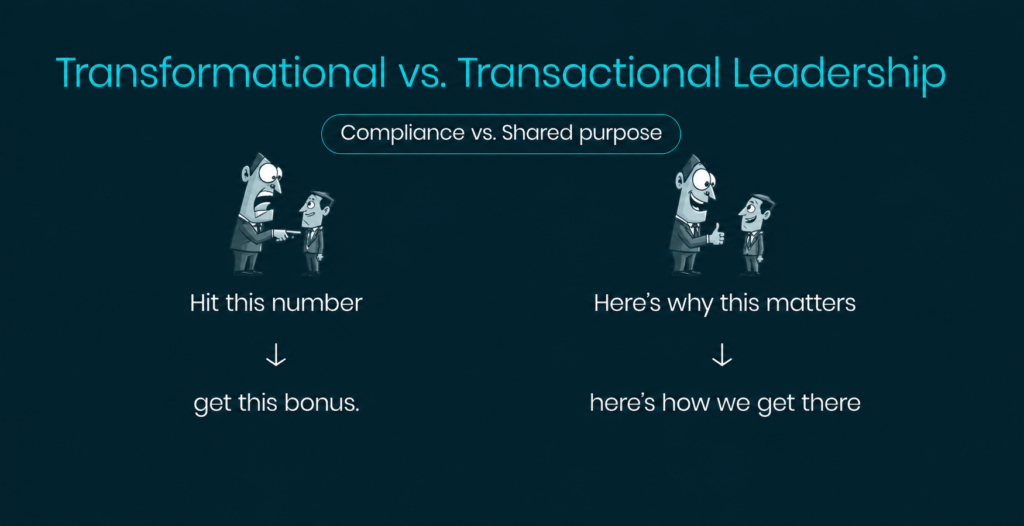
This differs from transactional leadership, which trades rewards for compliance. A transactional manager says, “Hit this number, get this bonus.” A transformational leader says something different: “Here’s why this matters, and here’s how we get there.” Both styles have a place, but only one builds loyalty that survives a hard quarter.
The AI revolution makes this style non-negotiable. When machines handle routine execution, the human job shifts to vision, judgment, and trust. That’s where this leadership style earns its keep.
Founders who lead this way build teams that adapt fast. People trust the direction even when the plan changes mid-quarter, and that trust is what keeps a team moving instead of freezing.
Why Leadership Transformation Can’t Wait for the Next Reorg
Leadership transformation used to happen on a schedule: a new title, a training program, maybe an offsite. That timeline doesn’t work anymore.
AI changes job descriptions every quarter, not every five years. A leader who waits for the “right moment” to change how they lead will run out of moment.
Most leadership development programs still fail because they train for a version of the job that already changed. Leadership transformation has to happen alongside the work, not in a separate room once a year.
Small, constant adjustments beat one big overhaul. A leader who reviews their own habits monthly stays closer to how the team actually works.
Servant Leadership Is the Foundation AI-Native Teams Need
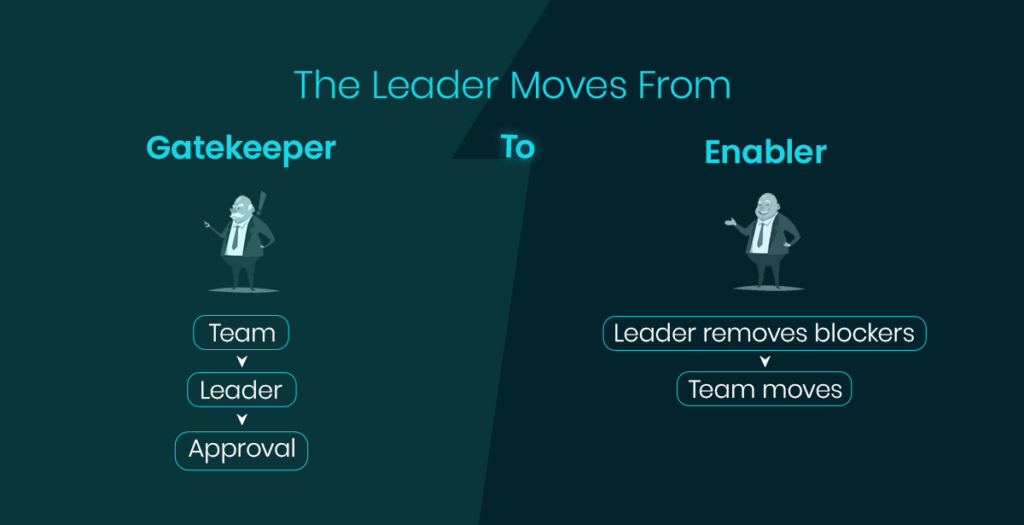
Servant leadership flips the usual hierarchy. The leader’s job is to remove obstacles for the team, not sit above it and issue orders.
This matters more now because AI-native teams move fast. A pod can’t wait three days for a director to approve a decision. The leader’s role becomes clearing the path, not gating it.
Coaching, not policy enforcement, is what servant leadership looks like day to day. A servant leader asks better questions instead of writing more rules.
That shift feels uncomfortable for leaders trained to command. It pays off fast once a team starts solving problems without waiting for permission.
Why Executive Leadership Coaching Matters More in the AI Era
Executive leadership coaching used to be a perk reserved for the C-suite. That’s changing, and the data explains why.
According to the International Coaching Federation, 87% of surveyed leaders say executive coaching delivers a strong return on investment. Companies that pair coaching with structured leadership development see the gains compound, not just add up.
Coaching works because it targets behavior, not just knowledge. A workshop teaches a leader what to do. Coaching helps them do it under pressure, which is where most leadership habits break down.
Founders often resist coaching because they think it’s a sign of weakness. In practice, it’s closer to the way athletes use a coach: to sharpen skill that’s already there.
Most executive leadership coaching engagements run for three to six months, with regular check-ins tied to real decisions the leader is facing that week. That structure is what makes the behavior change stick, instead of fading out once the workshop ends.
Building a Leadership Mindset Through Real Leadership Development
A leadership mindset isn’t a personality trait. It’s a set of habits: curiosity, comfort with ambiguity, and the willingness to say “I don’t know yet.”
Gallup’s research found something worth sitting with. Manager quality explains 70% of the variance in team engagement. That single number should reset how every company budgets for leadership development.
Leadership development that builds this mindset looks less like a lecture series and more like practice. Real decisions, real feedback, and real stakes teach faster than theory.
Our guide on building a culture of innovation covers how to create the conditions for that kind of practice.
Frequently Asked Questions
What’s the difference between transformational and transactional leadership?
Transformational leadership inspires people toward a shared vision. Transactional leadership trades rewards for specific results. Most AI-era teams need both, but this style carries more weight now.
Can servant leadership work in a fast-moving, AI-native company?
Yes. Servant leadership speeds things up because the leader removes blockers instead of adding approval steps. Fast teams need leaders who clear the path, not guard it.
Does executive leadership coaching really change behavior?
It does, when paired with accountability. Coaching targets specific behaviors under real pressure, and that sticks better than a one-time workshop.
How do you build a leadership mindset if you weren’t born with one?
You practice it. Leadership mindset develops through real decisions, tight feedback loops, and coaching, not personality tests.
Start Your Leadership Transformation
Transformational leadership isn’t a soft skill anymore. It’s the operating skill that decides whether your company adapts to AI or loses ground to a competitor who did.
Leadership transformation, servant leadership, and real leadership development aren’t three separate initiatives. They’re one shift. It’s about leading people the way AI-native work actually demands.
Talk to our leadership consulting team and find out where your leadership style needs to change first. The sooner you start, the less catching up you’ll do later.